Hydroponic Chillies
- Home
- Hydroponic Plants
- Hydroponic Chillies

Are hydroponic chillies worth growing? Yes, they definitely are, and there are quite a few reasons.
Chillies are long-season fruits. They grow in hot climates, but you can simulate that climate at home, and they work really well in hydroponics. I’ve managed to grow them pretty much all year round indoors under climate-controlled conditions.
One of the counterpoints is that chillies are slow-growing. Not ridiculously slow, but they’ll take two to three months to really come out in full. After that, if you take care of them, they will keep producing fruit until the plant reaches full maturity and stops producing. I’ve managed to get successive blooms and production of chillies from one individual plant.
The reason I started growing them originally is because my wife really likes chillies. I wanted to grow them for her, as well as challenge myself to grow a hot-climate plant during the off-season. So, during a colder season in the UK, I wanted to see if I could grow them indoors. I was successful, so I was really pleased with that. They’re quite valuable if you’re looking to sell them or make a business out of growing chillies.
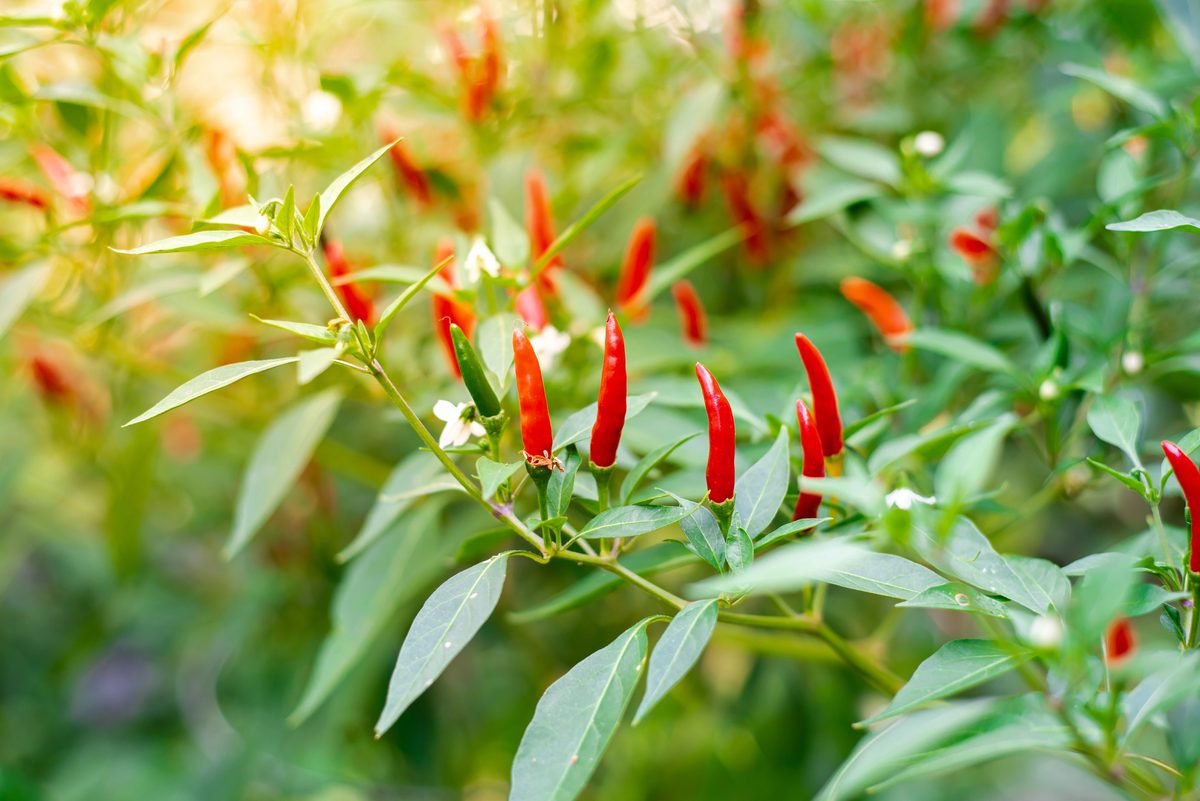
Hydroponic chillies at a glance
- System: deep water culture, or Dutch buckets for several plants. Countertop kits work, but a small reservoir limits the size of the plant.
- Light: 14 to 16 hours a day. I ran them on a 16/8 grow cycle.
- pH: 5.8 to 6.2.
- EC (feed strength): 1.2 to 1.8 for the vegetative stage, 1.8 to 2.4 for flowering and fruiting.
- Germination: 26 to 30°C (79 to 86°F) at the seed, with a heat mat or heated propagator.
- Root zone: 18 to 22°C (64 to 72°F). Air: 21 to 29°C (70 to 84°F) by day, not below 15°C (59°F) at night. Humidity: 50 to 70%.
- Pollination: a fan, a daily tap, or a paintbrush. I use the paintbrush method.
- Time to first chillies: around three months from seed to my first smaller chillies. First ripe pods are usually quoted at 18 to 26 weeks.
- Yield: roughly 10 to 20 chillies per three-month cycle, on a LetPot and an AutoPot.
Where I’d start
- Pick the simplest-looking one first. Learning the basics of hydroponics is key; then increase complexity.
- Countertop kits are a completely valid option. I’ve grown chillies using this method. If it’s a small reservoir, that’s going to limit the size of the plant.
- Cayenne. They were great. They produced exactly what I wanted, and they were quite easy to manage.
What you need to grow chillies hydroponically
Which system
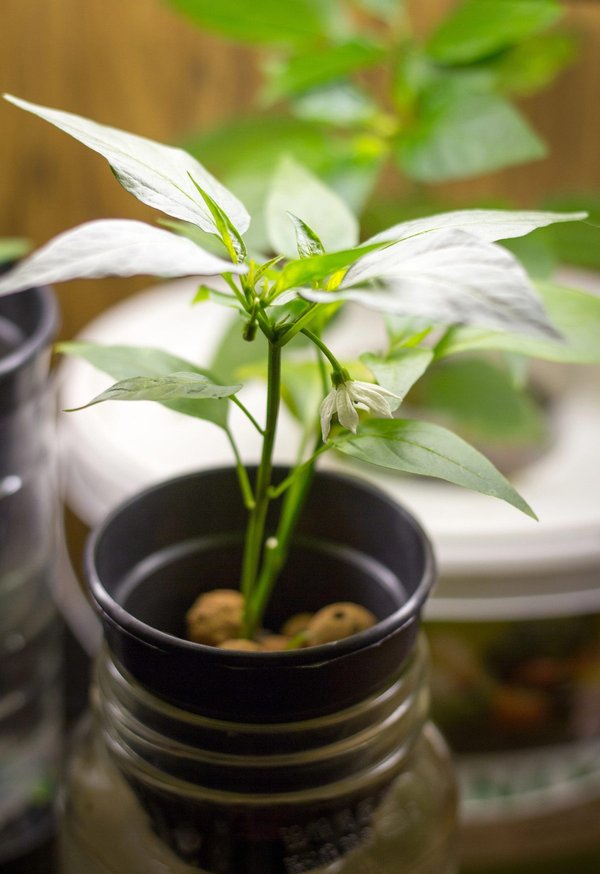
Chillies are a fruiting crop with big roots and a long lifespan, so the system has to be able to hold a large volume of water, or at least you need to be able to replace that volume of water regularly. You also need enough space to accommodate a large root system.
Deep water culture is a good system to choose for this. You could also use a Dutch bucket system if you’ve got multiple plants, because you can feed them from one reservoir instead of topping up individually. Instead of having each plant in its own reservoir, you’ll have one master reservoir that feeds each plant.
The Kratky system is also an option, but it depends on how skilled you are at staying on top of managing the plant. If you’re looking for an optimised solution, Kratky is probably not the best one. It’s fine for the seedling stage and for a short-term crop, but if you’re looking to have a long-term crop, like you will with many chilli plants, the reservoir is going to be exhausted regularly and you’re going to have to fill it up. Aeration is going to be an issue, as is root space.
Countertop kits are also a completely valid option here. I’ve grown chillies using this method. It depends on the size of the reservoir in the countertop kit and how long you plan on growing the plant for. If it’s a small reservoir, that’s going to limit the size of the plant.
The systems I’ve used
| System | Notes |
|---|---|
| Countertop kit (LetPot) | “Very good and has always produced a nice harvest, slightly technical in areas, for example, if the water level float gets stuck.” |
| Deep water culture | “Easy to set up and very versatile.” |
| Dutch buckets | “Very versatile; if gravity-fed, also very low maintenance.” |
| AutoPot | “Great system for modularity and requires no power.” |
| Kratky | “Easy to set up but limited in terms of crop size and longevity.” |
Light
Lighting is always a massive consideration for any plant that you grow. If it’s outside, you’re at the mercy of the sunlight, so that’s seasonally and geographically dependent on where you are. Here in the UK, it’s not going to be a viable plant to grow during seasons with lower sun or fewer sunlight hours.
Indoors, you have a lot more control. Chillies are a full-sun crop. They’ve got large leaves and they’ll do great when there’s plenty of sunlight. If you’re using LEDs, you would want to have an LED running between 14 and 16 hours a day over your crop.
You wouldn’t want to run the LED lights 24 hours a day because chillies, and plants generally, need downtime, like humans, to rest. So a 16/8 cycle, 16 hours of light and eight hours of darkness, is useful.
As for the height that you hang your lights above your plants, it depends on the intensity and wattage of the lights, but there’ll be guidance for that from the manufacturer.
I used an Omega Spectra G-line LED grow light for my chillies, and this was perfect. It had intensity control, and I had it suspended using metal wires. I gauged the height based on the response I was getting from the chillies as they grew, so I would change the height accordingly. I ran them on a 16/8 grow cycle.
Air movement and aeration
It’s a good idea to have a small oscillating fan or some form of ventilation in your growing space, to make sure the air is constantly moving. It allows for proper evaporation and transpiration of any water on the leaves of the plants, as well as reducing the chance of fungal diseases.
If you’ve got a reservoir, some form of air stone is always useful to oxygenate the water and make sure the oxygen levels are consistently high in the reservoir. It helps reduce stagnation in the water.
Nutrients, pH and EC
You’ll need to consider using grow and bloom nutrients. Grow nutrients are for the vegetative stage, when you’re growing the green part of the plant, and then bloom nutrients are for when the flowers and fruits start to develop.
As for EC and pH, make sure to measure them every day. The EC and pH will be specific to the type of chillies you’re growing, but generally speaking, you want the pH to be ever so slightly acidic. EC will depend on which period of growth you’re at.
From my own grows: the medium and kit I used
As for growing medium, it’s very much dependent on the system. I used coco coir. I had coco coir in pots and was bottom-feeding my chillies. When I grew them in a countertop system, I was using coco coir and peat grow plugs, and both worked just fine to support the plant.
The kit that I used for this was an LED pot system with automatic feeding and a built-in LED grow light. The other system, where I used my own LEDs, was an AutoPot system. This was the bottom-feeding system.
The variety I grew
The variety of chillies that I grew were cayenne chilli peppers.
Other varieties, from published growing information (not from my own grows). Indoors, plant size and days to ripe matter more than heat.
| Type | Examples | Indoors |
|---|---|---|
| Capsicum annuum | Cayenne, jalapeño, serrano, padrón | Fast and compact. A good first choice |
| Capsicum chinense | Habanero, scotch bonnet | Slower to germinate and ripen, and they sulk if the root zone is cold |
| Capsicum baccatum and pubescens | Aji types, rocoto | Very slow. Not a first hydroponic chilli |
Check the seed packet for days to ripe and mature height. Over a metre and a plant will outgrow the canopy and shade itself.
Germinating chilli seeds and the seedling stage
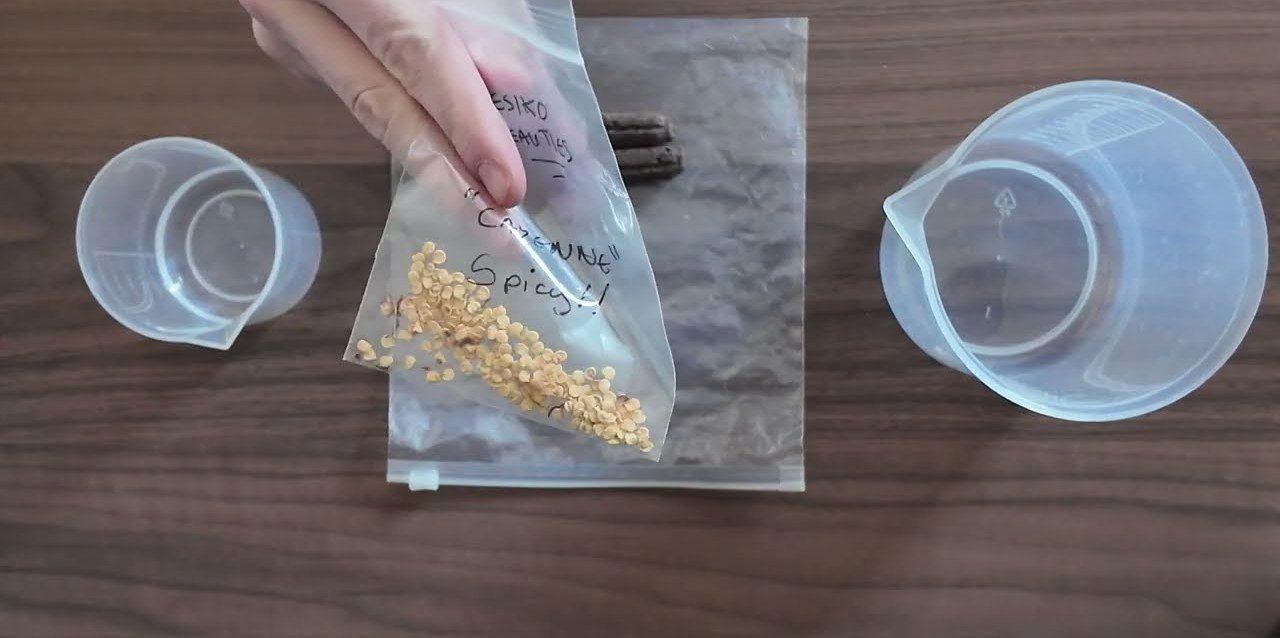
Getting the seeds to sprout
Chilli seeds can be very slow to germinate at times and can be quite fussy when it comes to temperature. This is the stage where most people think that their seeds aren’t going to grow or sprout. I had that exact same experience where I thought they’d died, and then after a certain amount of time they did actually poke through.
Germination wants to occur between 26 and 30 degrees Celsius at the seed, so not room temperature. A heat mat will make a big difference because you can dictate the temperature of the seed itself.
The medium that you can germinate them in could be rock wool soaked in pH-adjusted water at around 5.5, so acidic, or a plug in a propagator. Keep it humid but not wet.
You don’t need nutrients during germination, only once leaves start to develop. The seed carries the seedling, as well as the nutrients that it needs.
Light for seedlings
Light isn’t needed when you just have seeds. It’s only once the seeds germinate and you get the first sprouts that you want to introduce low-intensity light above the seedlings.
What you want to avoid are leggy seedlings. Leggy seedlings occur when the light intensity is too low and the seedlings start to stretch up high. They become long, thin and quite weak because they’re trying to reach the light and they’re not getting enough.
You can either increase the intensity of the light by turning it up, if it has variable intensity, or move the light closer to the seedlings themselves.
When to transplant
The seedlings will be ready to transplant into your system when the roots come through and you can clearly see them through the bottom of the media, and when there are two or three sets of true leaves. This will typically be somewhere between four and six weeks, depending on the species.
From my own grows: how I germinate mine
The germination method I use when I grow my chillies is a heated propagator. It’s a propagator with a heated bottom and a plastic dome on top to retain moisture and make sure that the seedlings don’t dry out.
That’s one issue that I’ve had in the past. I’ll go to check the medium that they’re sitting in and it will be bone dry.
The medium I’ve used is either damp tissue paper or damp coco coir. You need to make sure to spray it, hydrate it and, especially because the propagator is heated, make sure that it doesn’t become dry.
Feeding hydroponic chillies: pH, EC and calcium
pH
The pH band for chillies is between 5.8 and 6.2, slightly higher than lettuce, and that does matter. Calcium and magnesium uptake falls off below a pH of about 5.5, and calcium is exactly what fruiting chillies need the most.
EC
Typical ranges by stage, from published growing figures
| Stage | pH | EC (mS/cm) |
|---|---|---|
| Seedling, first true leaves | 5.8 to 6.2 | 0.6 to 0.8 |
| Vegetative | 5.8 to 6.2 | 1.2 to 1.8 |
| Flowering and early fruit set | 5.8 to 6.2 | 1.8 to 2.4 |
| Fruit swell and ripening | 6.0 to 6.3 | 2.0 to 2.5 |
The figures are for a plant under good lights. A plant under weak lights cannot use a strong feed and will show signs of burning at an EC that it should normally be fine with. So get the lighting right first, and then feed.
Calcium, magnesium and blossom end rot
Calcium and magnesium are specific requirements, rather than general additions. Under LEDs, with either reverse-osmosis or soft water, and with a fruiting crop, calcium demand is going to be high.
You can get blossom end rot on chillies, and it’s nearly always due to calcium delivery problems or inconsistent watering. The EC could be too high or the root-zone temperature could be wrong, rather than there being an absence of calcium in the reservoir. So it’s not necessarily that you aren’t adding calcium; there can be an issue with the calcium actually getting into the plant properly.
Root-zone and air temperature
For the root-zone temperature, so where the roots are sitting in the water or in the medium, think around 18 to 22 degrees Celsius. Anywhere above 24 degrees Celsius and dissolved oxygen is going to start to fall off, and root disease can start to become an issue.
Below 16 degrees Celsius, the plant will simply stop growing. It will be too cold for the plant’s metabolic processes.
For air temperature, keep it between around 21 and 29 degrees Celsius during the day and nothing below 15 degrees Celsius at night. Chillies drop flowers outside of that temperature range, and with no flowers, there’s no fruit.
Reservoir changes
Top it up with plain pH-adjusted water between changes, and then do full changes every 10 to 14 days on a fruiting plant.
The routine, in short
- Every day: measure the EC and pH.
- Between changes: top it up with plain pH-adjusted water. You don’t want to let it run dry.
- Every 10 to 14 days on a fruiting plant: a full change.
- When the flowers and fruits start to develop: switch from grow to bloom nutrients.
- While the flowers are open: pollinate, mid-morning to early afternoon.
Pollinating chillies indoors
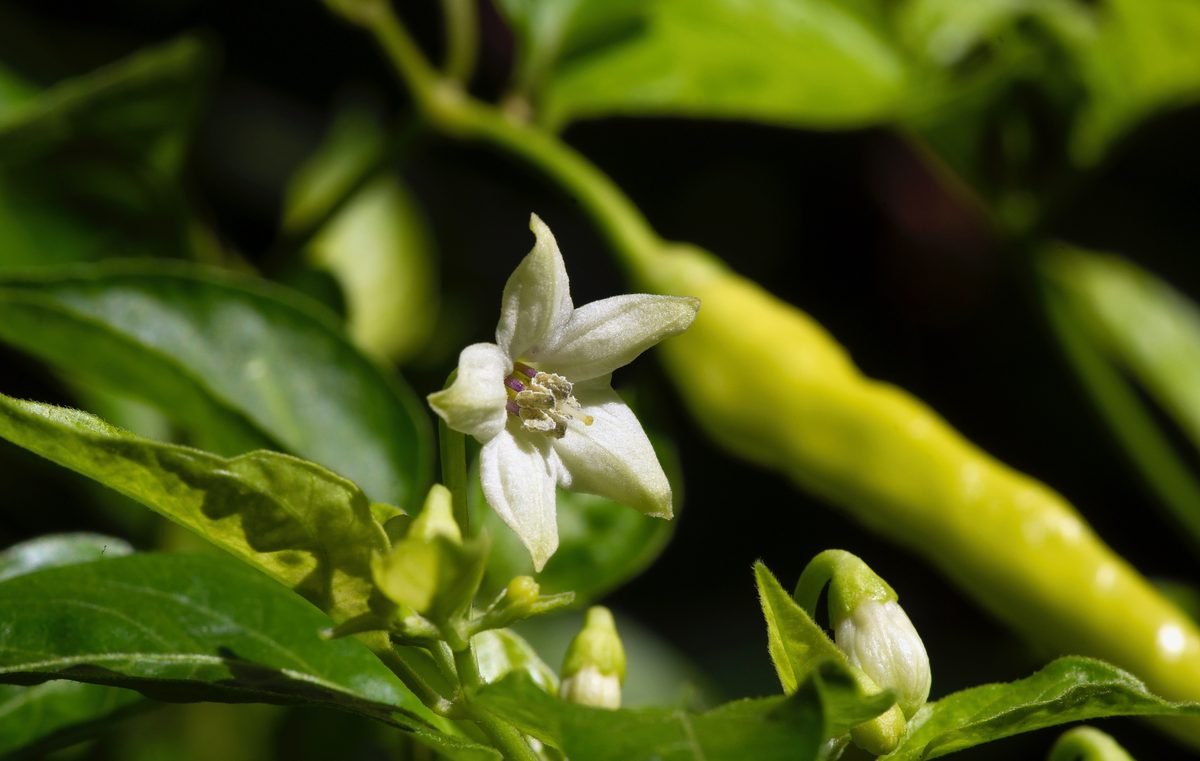
Pollination is an interesting situation, especially when growing indoors. Chillies are self-fertile. They don’t need a second plant and they don’t need bees to be pollinated. What they do need, though, is movement.
The pollen needs to be agitated and released so that it can move between flowers. Indoors, still air means that flowers can open, do nothing and drop. This is one of the main reasons that a healthy-looking chilli plant indoors might produce no fruit.
Three ways to pollinate
- A fan on the plants, enough to move the leaves but not enough to whip them around. That’s usually sufficient.
- You can also tap or flick each flower stem once a day, or give the plant a gentle shake and agitate the pollen when the flowers are open. This can help the pollen move between flowers.
- Or you could use a small brush, like a paintbrush, to transfer pollen from one flower to another. It takes more time, but it’s the most reliable method.
The best time to do this is mid-morning to early afternoon, a few hours into the lighting period.
Why flowers drop
When flowers drop, there are a few possible reasons for this, and only one is pollination.
- The night temperature might be too low, below 15 degrees Celsius, or the daytime temperature might be too high, above 32 degrees Celsius.
- The humidity might be too low, meaning the pollen won’t stick, or too high, meaning that it clumps up. You want to aim for about 50 to 70% humidity.
- Nitrogen is too high, which grows leaves at the expense of fruit.
- There might be no air movement.
A young plant dropping its first flush of flowers is normal and to be expected. Some growers even remove the very first flowers to let the plant build up its size first, because if you start growing full-size fruits on a smaller plant, it can put strain on that plant’s structure.
From my own grows: how I pollinate mine
Personally, I use the paintbrush method. I find it quite therapeutic or meditative to go through each individual flower and brush it with the paintbrush.
Start with one, go around all of the flowers and then end up back on that first one. When you start with it, there’s nothing on the paintbrush. You want to make sure that each time you’re touching a flower, the brush is loaded with pollen.
Topping, pruning and support
Most indoor chillies want topping off once at around 15 to 20 centimetres, to force a bushier plant that fits within an indoor lighting footprint.
Make sure that your chilli plants don’t get to the point where they’re touching the light before you top them off, because that can burn the plant itself and damage some of the existing leaves.
If you’re growing outdoors, it’s different. They can grow much larger, and if you’ve got the space indoors, maybe you want a larger plant. For me, I kept my plants at probably closer to 30 centimetres.
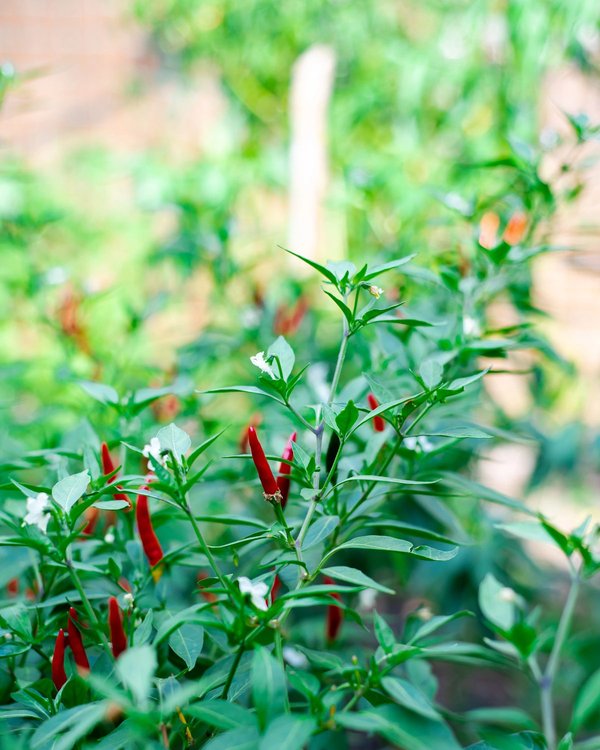
Support is really important. A fruiting chilli plant becomes quite top-heavy, so a single cane or some form of twine or lattice structure can help. I would always support my chilli plants with a stick or cane and tie them to that.
Don’t strip leaves to let light in. The chillies ripen on stored sugar, and the leaves are what produce that sugar.
What goes wrong, and what it usually is
- Leaves yellowing from the bottom up: it could be nitrogen. Usually, this is a feed that has been coasting too long or a reservoir that’s overdue for a change. Check the EC or change the reservoir.
- Yellowing between the veins on new growth while the veins are still green: this can be to do with iron or magnesium, and it’s often a pH problem locking them out rather than an absence of them. Check the pH before adding anything.
- Sunken, dark, leathery patches on the blossom ends of the pods: this is blossom end rot, which is a result of calcium delivery. Check the root-zone temperature, the electrical conductivity and whether the reservoir is running dry between top-ups. You don’t want to let it run dry.
- Flowers dropping: we mentioned that previously.
- Leaf edges curling upwards and inwards: it’s usually heat or light stress. Check the distance from the light and the canopy temperature.
- Tiny pale speckles or fine webbing: this is a sign that spider mites are present. They love warm, dry air, and chillies can create this environment.
- Silvery scarring on the leaves or black specks: it’s a sign of thrips.
- Sticky leaves or clusters on new growth: that’s aphids.
- Brown, slimy roots and the roots have a smell: this is root rot. On chillies, it’s often the reservoir running too warm that causes this.
- Plants look fine and grow well but produce nothing: it’s probably a light or pollination issue.
From my own grows: what went wrong
I’ve had the stinking, slimy reservoir issue. It absolutely stinks, and it started to kill my chillies, so I made sure to cool the reservoir down and make sure there was plenty of oxygen in it. I think my main issue was a lack of oxygen, so I added hydrogen peroxide to my reservoir to solve this.
I’ve also had the lack of pollination issue, where the plant wasn’t growing any fruit. The fruit issue for me was pollination, and manual pollination with a paintbrush solved that.
Harvesting hydroponic chillies
It’s up to you to decide when you want to pick the chillies. You can pick them when they’re green or when they’re red. The longer you leave them, they turn from green to red, and generally the longer you leave them, the hotter and sweeter they get.
When removing the chilli itself from the plant, you want to avoid leaving a long bit of stem because that stem can rot. You want to either very carefully cut it as close as possible to the plant or pluck it gently without snapping the branch, where the stem of the chilli fruit meets the plant itself.
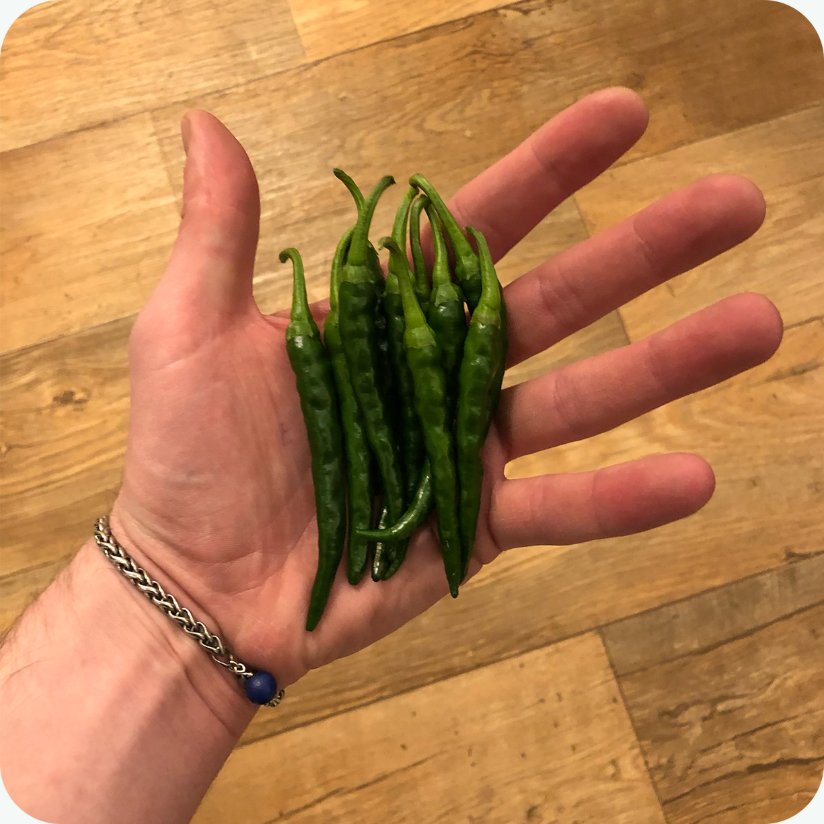
Picking increases yield. A plant carrying ripe fruit slows down, and picking the fruit off will cause more to grow in its place.
How long hydroponic chillies take
The expected timeline from seed to germination is about one to four weeks. The seedling stage lasts about four to six weeks, the vegetative stage around six to ten weeks, with the first flowers around ten to fourteen weeks and the first ripe fruit pods around eighteen to twenty-six weeks, depending on the variety.
For me, my actual timeline from seed to when I was first harvesting smaller chillies was around three months. That’s from when I took the seeds out of the packet to when I was actually picking the fruit itself.
Storing chillies, and keeping a plant for a second year
For storing them, you either want to eat them fairly quickly or freeze them. They freeze really well and you can use them in cooking later on.
Chillies are perennial plants, and a plant cut back hard and kept in a warm, well-lit area throughout the winter will restart in spring.
Hydroponic chillies: questions and answers
How long do hydroponic chillies take to grow?
They take around 18 to 26 weeks from seed to the first ripe fruit.
Are hydroponic chillies hotter?
No, not specifically. The heat is dependent on the genetics of the plant and dependent on how well you feed it and how long you grow it for.
Do I need two plants to pollinate?
No, they are self-pollinating plants. You need to make sure that pollen makes it from one flower to another.
What pH is needed for hydroponic chillies?
Around 5.8 to 6.2.
What EC for hydroponic chillies?
It depends on the variety, but between 1.2 and 1.8 for the vegetative stage and between 1.8 and 2.4 for the flowering and fruiting stage.
Can I grow chillies in a Kratky jar?
Yes, you can. I’ve seen people grow some quite impressive ones, but you might be limited depending on the size of the jar.
Can I grow chillies in an AeroGarden?
Yeah, definitely. I’ve grown them in a very similar system.
Why is my chilli plant flowering but not fruiting?
It’s an air movement problem, or potentially night temperature, humidity or a nitrogen issue. But beyond all of that, it could be that the pollen isn’t reaching each of the flowers.
Why are the leaves on my plant turning yellow?
If the yellowing is from the bottom of the plant upwards, it’s probably nitrogen or a stale reservoir. If it’s yellow between the veins of the leaves on new growth, it might be pH lockout.
How much light do chillies need?
Between 14 and 16 hours a day.
What is the best chilli to grow hydroponically for beginners?
I chose cayenne peppers. They were great. They produced exactly what I wanted, and they were quite easy to manage.
Can I keep a plant for a second year?
Yes, you can, as long as you cut it back, keep it warm and keep it well lit.
One email a month from me, Charlie. What is new on the site, one grower’s question answered properly, and the latest video. No spam, no selling.


I’m Charlie, co-founder of Everything Hydroponics. I’ve completed an official qualification in hydroponic cultivation, I run the Everything Hydroponics YouTube channel, and I’ve advised and taught many new and existing growers. I’m a teacher at heart, so what you read here is backed up by peer reviewed research and presented in a digestible way. Most of my growing time now goes on chillies. More about Charlie
You might like these
Hydroponic Leafy Greens: A Step By Step Guide To Growing Lettuce
Leafy greens are the quickest way into hydroponics. What counts as one, and a step by step guide to growing lettuce from choosing seed to harvest.
Hydroponic Microgreens: How To Grow A Tray At Home
Microgreens are seedlings cut before their first true leaves, and they germinate in four or five days. What to sow, how to light them, and when to harvest.