Hydroponic Leafy Greens
- Home
- Hydroponic Plants
- Hydroponic Leafy Greens
What are Hydroponic Leafy Greens?
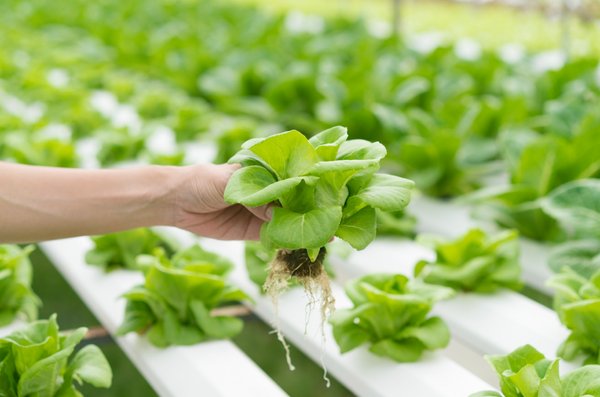
Leafy greens are any plants or vegetables that we grow predominantly to harvest the leaves of the plant. and Hydroponic leafy greens are simply those which are grown using hydroponics!
Think, lettuce, kale, spinach, rocket/arugula etc. All are leafy greens.
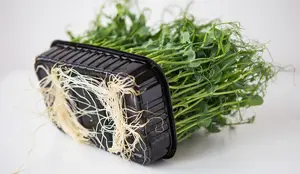
They are a great first pick for hydroponics because their requirements are relatively simple. They don't require two separate nutrient mixes for their initial growth stage, then another for their fruiting stage; they usually develop quite quickly; many can also be harvested early as microgreens!
Hydroponic leafy greens are the first plant I tried to grow hydroponically, and they allowed me to experiment and understand the fundementals of hydroponics without having to wait extended periods of time and without investing financially in any complex systems and equipment.
A STEP-BY-STEP GUIDE TO GROWING HYDROPONIC LETTUCE
Many people who are new to hydroponics want to begin with something simple and reliable, like lettuce. It grows quickly, responds well to controlled environments, and is ideal for beginners. Here is a clear, step-by-step guide to help you grow hydroponic lettuce successfully.
Choose Your Seeds
Start by selecting the right seeds. If you live in a warm climate, choose bolt-resistant varieties to prevent premature flowering.
Pelleted seeds are an excellent option. They reduce waste and make planting more precise. Begin with a classic green leaf lettuce and add something more distinctive, such as butterhead or purple varieties. Some types are even specifically bred for hydroponic systems.
Choose Your Growing Medium
Lettice grows comfortable in most mediums. I always prefer to use biodegradable media like coco coir if possible, but in some cases, a medium that is structurally whole, like rockwool or sponge, is the only option. Use a pencil or similar object to gently create a small hole in your medium of choice if there is no preexisting one. Place two or three seeds into each hole. No nutrient solution is needed at this stage.
Tip: Sow seeds while the nutrient is dry. If it is already wet, seeds will stick wherever they first land.
Tip: After watering, cover the seeds with damp newspaper or paper. Darkness encourages germination.
Provide Warmth and Light
Place your seeds in a warm, well-lit location. You may use a heat mat, grow tent, or mini greenhouse to maintain warmth. Set your watering system on a timer to keep the media consistently moist. If it dries out, seeds will not germinate.
Tip: Avoid watering at night.
If using grow lights, you may run them 24 hours until germination, or provide 12-18 hours daily. Outdoors, natural daylight is sufficient, though supplemental lighting may help if days are shorter than 12 hours.
Germination
Within four to six days, seedlings should begin to emerge. Remove the newspaper covering at this point.
Tip: Avoid sudden changes to lighting schedules. If increasing light duration, do so gradually, adding one hour per day rather than several hours at once.
The first leaves are called cotyledons. These are supported by nutrients stored within the seed itself. Do not introduce nutrient solution until true leaves appear.
Introduce Nutrients
When the second set of leaves, the true leaves, appear, begin feeding with nutrient solution at half strength.
An EC of 0.5 is appropriate for young seedlings. Increase gradually as the plants grow.
Tip: Growth may briefly slow while the plant focuses on root development. Once roots establish, leaf growth will accelerate.
Tip: Avoid watering at night.
Transplanting into Your System
When the seedlings resemble small lettuce plants, you can transfer them into your hydroponic system.
At this stage:
EC should be approximately 0.4-0.6
pH should range from 5.0-6.2, ideally around 5.8
Positioning in Your System
Place each seeding carefully into your chosen system: In systems using clay balls, fill the net cups fully. In NFT systems, ensure roots reach the water flow. In deep water culture, always use an air stone or aerator to prevent oxygen deprivation. Handle roots gently. They are delicate and covered in microscopic root hairs that are easily damaged.
Ongoing Care
Adjust EC and pH gradually as plants mature. Maintain consistent watering, neither excessive nor insufficient. Make all changes slowly. Lettuce thrives on consistency. Sudden alterations to light, water, or nutrients can cause stress. If growing outdoors, avoid rotating or moving plants once positioned. They adapt to a fixed light direction. Never shock plants by rinsing roots or applying hydrogen peroxide unnecessarily.
Night Routine
Turn off watering when lights go off. Without light, plants cannot effectively uptake water. Sitting in cold water overnight can cause stress and overwatering issues. In very hot climates, a light overnight watering may be necessary to prevent drying.
Final Growth Stage
As plants grow larger, gradually increase EC to between 1.2 and 1.8.
Replace and refresh your nutrient solution at least once per month.
Enjoy harvesting your own fresh, homegrown hydroponic lettuce.
One email a month from me, Charlie. What is new on the site, one grower’s question answered properly, and the latest video. No spam, no selling.


I’m Charlie, co-founder of Everything Hydroponics. I’ve completed an official qualification in hydroponic cultivation, I run the Everything Hydroponics YouTube channel, and I’ve advised and taught many new and existing growers. I’m a teacher at heart, so what you read here is backed up by peer reviewed research and presented in a digestible way. Most of my growing time now goes on chillies. More about Charlie
You might like these
Hydroponic Microgreens: How To Grow A Tray At Home
Microgreens are seedlings cut before their first true leaves, and they germinate in four or five days. What to sow, how to light them, and when to harvest.
Hydroponic Strawberries - A Grower's Guide
Do you want to know how to grow hydroponic strawberries? Follow this easy step-by-step guide for great results.