Hydroponic Onions
- Home
- Hydroponic Plants
- Hydroponic Onions
How to Grow Hydroponic Onions
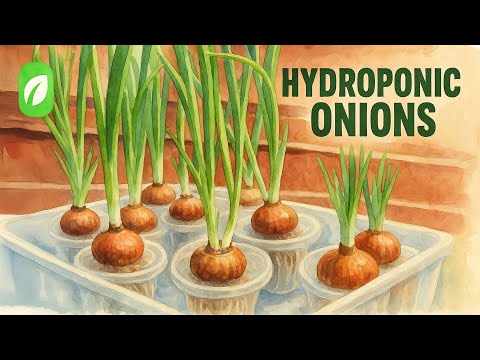
Although root crops can sometimes be more challenging to grow hydroponically, onions are among the more straightforward options. If you’re looking to grow onions using hydroponics, the process is relatively simple and well-suited to beginners.
Onions are not particularly demanding and perform well in a basic DWC (deep water culture) system. While they can also be grown in ebb and flow systems, these tend to be more complex. NFT (nutrient film technique) systems are another viable option, particularly if your focus is on producing bulbs rather than green shoots. Overall, DWC remains one of the most accessible and effective systems for growing onions.
There are many onion varieties, including green, white, red, and sweet onions, all of which adapt well to hydroponic growing. Onions can be grown either from seed or from sets. Starting from seed follows the same process as with most plants: germinate the seeds and then transplant the seedlings into your hydroponic system once established.
Alternatively, onions can be grown from sets, which are small, immature bulbs. These are widely available from garden centres and nurseries. Before use, ensure they are clean and free from any soil residue. Once prepared, they can be placed directly into the hydroponic system. When positioning the sets, aim to keep them at a consistent height. This helps maintain even root development and reduces the risk of root rot by ensuring adequate oxygen exposure.
In terms of growing media, onions perform well in perlite, rockwool, or composite plugs. They are relatively light feeders and do not require high levels of nutrients. The composition of the nutrient solution should be adjusted depending on your goal. For bulb production, a lower-nitrogen formula is preferable, whereas a higher-nitrogen solution will encourage leafy growth, though this often results in less developed bulbs.
Onions thrive within a pH range of 6.0 to 6.8. During the initial establishment phase, an EC level of around 2.0 is suitable, increasing to approximately 2.6 once the root system is established. The nutrient solution should be kept relatively cool, ideally between 18 and 20°C.
Lighting requirements vary depending on the type of onion being grown. There are three main categories: short-day, day-neutral, and long-day varieties. Bulb formation is triggered by day length. Short-day onions begin forming bulbs with around 11-12 hours of light, day-neutral varieties require approximately 12-14 hours, and long-day onions need 14 or more hours of light.
Green onion tops can typically be harvested around three weeks after planting sets. For bulb production, a longer growing period of approximately 80-90 days is required. Signs of maturity include yellowing foliage, stems beginning to fall over, or the emergence of flower stalks.
To harvest green tops, cut the larger outer leaves while leaving a few centimetres of growth above the medium. It is best to harvest no more than a third of the foliage at a time. For bulbs, simply remove the onions from the system once they have reached full maturity.
One email a month from me, Charlie. What is new on the site, one grower’s question answered properly, and the latest video. No spam, no selling.


I’m Charlie, co-founder of Everything Hydroponics. I’ve completed an official qualification in hydroponic cultivation, I run the Everything Hydroponics YouTube channel, and I’ve advised and taught many new and existing growers. I’m a teacher at heart, so what you read here is backed up by peer reviewed research and presented in a digestible way. Most of my growing time now goes on chillies. More about Charlie
You might like these
Hydroponic Leafy Greens: A Step By Step Guide To Growing Lettuce
Leafy greens are the quickest way into hydroponics. What counts as one, and a step by step guide to growing lettuce from choosing seed to harvest.
Hydroponic Microgreens: How To Grow A Tray At Home
Microgreens are seedlings cut before their first true leaves, and they germinate in four or five days. What to sow, how to light them, and when to harvest.
Hydroponic Strawberries - A Grower's Guide
Do you want to know how to grow hydroponic strawberries? Follow this easy step-by-step guide for great results.