Hydroponic Microgreens
- Home
- Hydroponic Plants
- Hydroponic Microgreens
What are Hydroponic Microgreens?
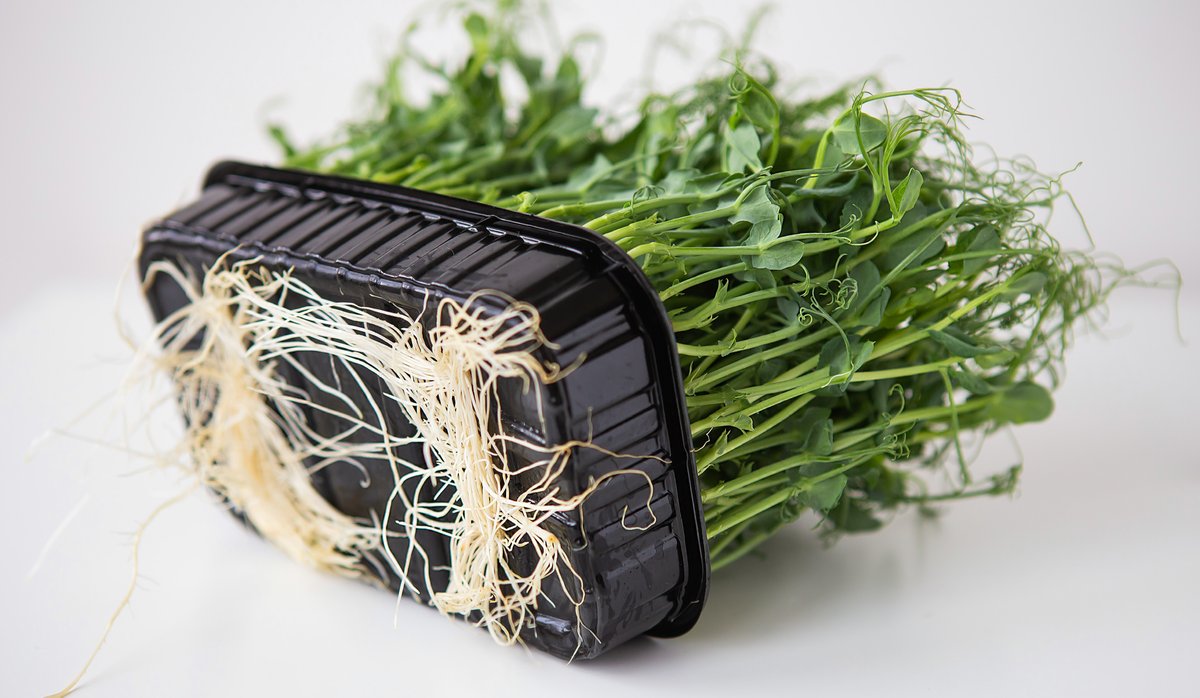
You’ve likely come across microgreens and their many benefits, and perhaps you’re interested in growing them yourself but would rather avoid the mess of soil. In that case, hydroponic microgreens offer a practical alternative. This approach provides a clean and efficient way to cultivate them without the drawbacks of soil-based growing.
Before getting into the process, it’s worth understanding what microgreens are and why they’ve gained such popularity. Microgreens are young seedlings of vegetables and herbs, harvested just before their first true leaves fully develop. This early harvest stage might seem unusual, but it’s precisely when the plants offer a superb flavour and texture. They are inexpensive to grow, suitable for year-round production, and can be ready to harvest in as little as one to two weeks. Ideal for those of us who like fast results!
Additionally, if you have a crop that you wish to harvest once fully grown, you can always remove a few select plants early in the growth cycle to use as microgreens. This can often be a good decision if your growing space is overcrowded; you get the bonus of microgreens while maintaining the health of your main crop!
Microgreens first gained traction in the 1980s, when chefs began using them as an affordable way to enhance presentation and flavour in their dishes. Today, they are widely used both in professional kitchens and in home cooking.
A wide variety of plants can be grown as microgreens. Common choices include broccoli, cabbage, clover, kohlrabi, kale, mustard, radish, pea, sunflower, wheatgrass, and amaranth.
Growing Microgreens at Home Video
How to Grow Hydroponic MicroGreens
To grow hydroponic microgreens, you will need:
- 2 growing trays without holes
- 1 growing tray with holes (or a standard tray with holes added manually). All trays should be the same size, with 10 × 20-inch (25 × 50 cm) trays being the most commonly used. This combination creates a simple hydroponic system; additional sets can be used to scale production.
- A growing medium such as BioStrate mats, hemp mats, jute pads, coco coir, or vermiculite
- Seeds
- Filtered or distilled water
- A pH control kit
- Nutrient solution
- A spray bottle
- LED or fluorescent grow lights
- Scissors for harvesting
The process from seed to harvest is as follows:
Place the tray with holes inside one of the trays without holes. The upper tray will hold the growing medium, while the lower tray will later contain the nutrient solution.
Filtered or distilled water is ideal for hydroponics. If using tap water, it should be prepared in advance by leaving it to stand for at least 24 hours or by boiling and cooling it to allow chlorine to dissipate. The pH should then be adjusted using a pH kit to fall between 5.5 and 6.5, ideally around 6.
Soak the growing medium in pH-balanced water until fully saturated, then allow excess water to drain briefly before placing it in the top tray.
Evenly distribute the seeds across the surface of the growing medium. Seeding density varies by crop, and guidance is usually provided on the seed packet. In general, this equates to roughly 1 large seed or 2 small seeds per square centimetre, or 6-8 large seeds or 10-12 small seeds per square inch. Online seed calculators can also be used for accuracy.
Lightly mist the seeds with pH-balanced water to ensure they are evenly moistened. Cover the tray by placing another tray upside down on top. This creates the dark, humid environment required for germination. Store the tray in a location with a stable temperature between 20 and 22°C.
For the next few days, keep the seeds covered and mist them twice daily. Only uncover the tray briefly for watering, ensuring the medium remains consistently moist.
After approximately 4-5 days, germination should occur. At this stage, roots will be visible through the bottom of the tray. Remove the cover and begin bottom-watering. Prepare a quarter-strength nutrient solution and add around half a cup to the lower tray.
Move the system to a well-lit area, such as a sunny windowsill or under grow lights. Microgreens require at least 6 hours of natural light per day or 12-16 hours under artificial lighting. LED or fluorescent grow lights are particularly effective, providing suitable light without generating excessive heat.
Continue bottom-watering with the nutrient solution twice daily for at least one week.
Growth rates vary by species. Some microgreens are ready in as little as 7 days, while most reach harvest stage in 10-12 days. Refer to seed packet guidance for specific timelines. To harvest, hold the canopy and cut just above the growing medium using scissors.
For storage, avoid washing the microgreens before refrigeration. Instead, dry them gently between paper towels and store them in a sealed container or bag. Properly stored, they will remain fresh for up to one week.
One email a month from me, Charlie. What is new on the site, one grower’s question answered properly, and the latest video. No spam, no selling.


I’m Charlie, co-founder of Everything Hydroponics. I’ve completed an official qualification in hydroponic cultivation, I run the Everything Hydroponics YouTube channel, and I’ve advised and taught many new and existing growers. I’m a teacher at heart, so what you read here is backed up by peer reviewed research and presented in a digestible way. Most of my growing time now goes on chillies. More about Charlie
You might like these
Hydroponic Leafy Greens: A Step By Step Guide To Growing Lettuce
Leafy greens are the quickest way into hydroponics. What counts as one, and a step by step guide to growing lettuce from choosing seed to harvest.
Hydroponic Strawberries - A Grower's Guide
Do you want to know how to grow hydroponic strawberries? Follow this easy step-by-step guide for great results.