How to Choose an Indoor Hydroponic Kit
- Home
- DIY & Kits
- Indoor Kits
The promise of this article is that it will not tell you the best kit, period, to buy. It will tell you how to select the kit that is best for you by ruling out other kits that you don’t need and focusing on the kit that you do.
The word “best” depends on what room you have, what budget you have, etc. And to reassure anybody reading this article who’s a first-time buyer, it’s normal not to know everything yet. Buying nothing this month, or right now, is fine after reading this page. You might not be ready to buy something just yet.
Pick the simplest-looking kit first. Learning the basics of hydroponics is key; then increase your complexity. If the first kit you ever buy doesn’t yield an amazing crop but does teach you fundamentally how to be a good hydroponic gardener and teaches you good hydroponic skills without confusing you, it’s worth it.
This page will look at a comparison of indoor hydroponic kits, and these kits are compared by how well they fit into your home, not necessarily from best to worst.
Indoor hydroponic kits at a glance
- Price: around £20 to £400 ($30 to $500).
- The seven checks: weight, reach, weekly time, consumables, noise, repairability, a worthwhile harvest.
- A year’s cost has three parts: the kit, the consumables or refills, and electricity.
- Regular harvests: herbs, salads and leafy greens. Fruiting crops will fruit, on a small scale.
- A kit is the wrong answer if you want larger crop sizes, or can’t spare ten minutes a week.
Where I’d start
If I were speaking to a friend who had never done hydroponics before and wanted to start, I would say get a fairly small kit, maybe one that houses around six plants, with an included light. If it comes with nutrients or some sort of included nutrition, that’s even better, just to minimise the amount of extra equipment or items that you need to buy to make it work.
The seven checks
1. Weight
Maybe the plants don’t weigh that much, but you are filling the system reservoir with water. For every litre of water, that’s an extra kilogram to move. Can you move the reservoir when it’s empty and when it’s full by yourself? Remember that 20 litres is 20 kilograms, and not everybody is able to do that.
2. Reach
Can you reach every part of the system wherever you’re going to put it? Is it easy to access different sides or different components, like switches? Are there compartments that you need to open in order to refill the reservoir? Can you maintain the crop easily if you need to trim the plant? Can you get to all sides of the system?
3. Weekly time
Does the upkeep of the system fit into about ten minutes per week? People fail in week six, not on day one. You might be able to engage with and maintain the system initially, but if you can’t do that over a long period of time, that’s what’s ultimately going to lead to the downfall of your crop. Consistency is key.
4. Consumables
Can you buy refills for your system? Do you need to purchase additional nutrients? Do you need to purchase additional media? Is this available where you live? Can you order it online? Are the prices in keeping with what you’ve budgeted for without being locked into a specific brand?
Unless you’re happy with just working with one brand, having variety makes things easier for you as a consumer.
5. Noise
Is the system in a room where excess noise will become problematic? For example, if your system has a pump, it might be noisy. If this is in a bedroom and it’s going to keep you awake, it’s maybe not the best idea. But if you can put it in another room where the noise is not a problem, then you’re going to be fine.
6. Repairability
If one part of the system fails, can you identify it and replace it inside a week, before your plants die if it’s preventing them from being fed, watered or receiving light? Is it easy to repair the system? Does the company you bought it from have a warranty, or do they offer spares and repairs?
7. A worthwhile harvest
Will it produce something that you’ll be able to put on your plate or consume? Or, if that’s not your goal, maybe your goal is just to experiment with growing plants and observing the process. Does it meet your personal goals?
Ultimately, you’re looking for the system that ticks all of these boxes.
From my own grows: the check I learned the hard way
For me, out of these seven checks, the one that I probably learned the hard way was repairs. Nothing has been more frustrating than investing time and money in a kit or a DIY project that I built myself, getting partway into the grow cycle, only to have a part fail or be incorrect and then having to wait for a replacement to arrive or not knowing how to fix the kit myself.
I’ve had this happen with both countertop all-in-one kits and DIY projects. With DIY projects, it’s perhaps a bit more understandable because I built it myself. I’m not 100% sure if it is or isn’t going to work.
But when you buy a kit, you assume that everything is going to work as intended. It may not always, and then your plants are at risk.
Start from your space, not the brand
There are three questions that will help you narrow down which kit you want very quickly: where will it live, what do you want to eat, and how much of your week are you willing to spend on your growing?
Firstly, in terms of where the system is going to live, you have to think about the physical footprint it will leave, either on your countertop, maybe on a dresser, or within a cupboard.
You also have to think about the height above the kit because your plants are going to grow upwards. We need to think about height clearance as well.
The three measurements people forget
There are three measurements that you need to remember and that people often forget.
First is the height from the surface to the underside of whatever is above, be that a ceiling or a cupboard. If you imagine you’re working on a countertop, you’re probably going to have kitchen cupboards above that. You need to think: will my plants grow and reach the bottom of the kitchen cupboards?
Not only that, if you’ve got a kit with included lights, you’re going to have lights above the plants, so that’s even more height you need to consider.
You also need room to lift the lid of the reservoir. If you’re picking up the reservoir lid, you’re going to be lifting the whole plant or plants upwards as well. You need to be able to move that out of the way without making contact with anything.
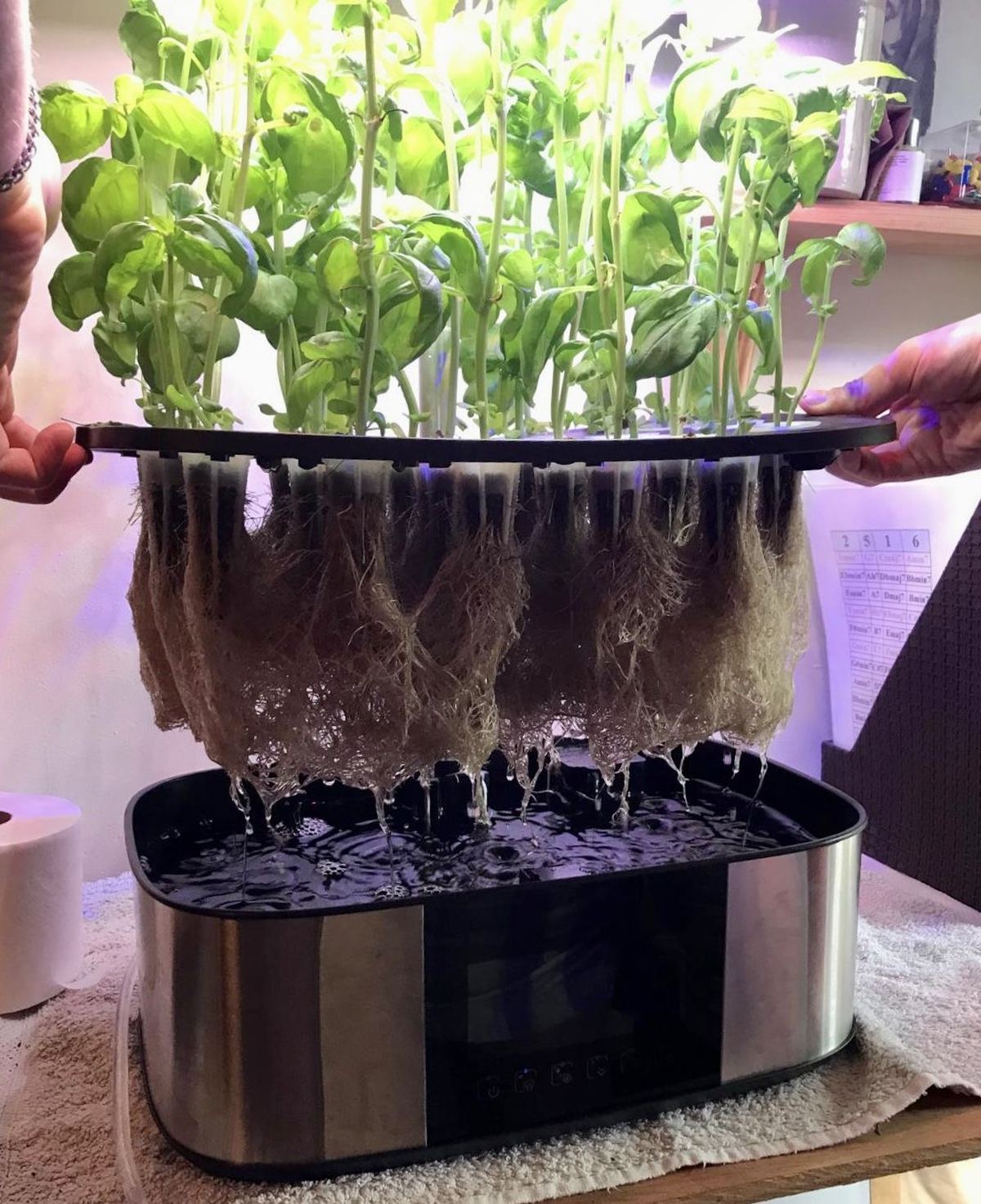
You also want to have access to sockets and electricity without lots of cables trailing across the surface. If you’re thinking of a kitchen countertop, you don’t want to have too many cables in your way.
Four home situations
The four main situations I would say suit most people are a windowsill or worktop, a corner of a room, a spare room or cupboard, or a pseudo-outside space such as a greenhouse or conservatory.
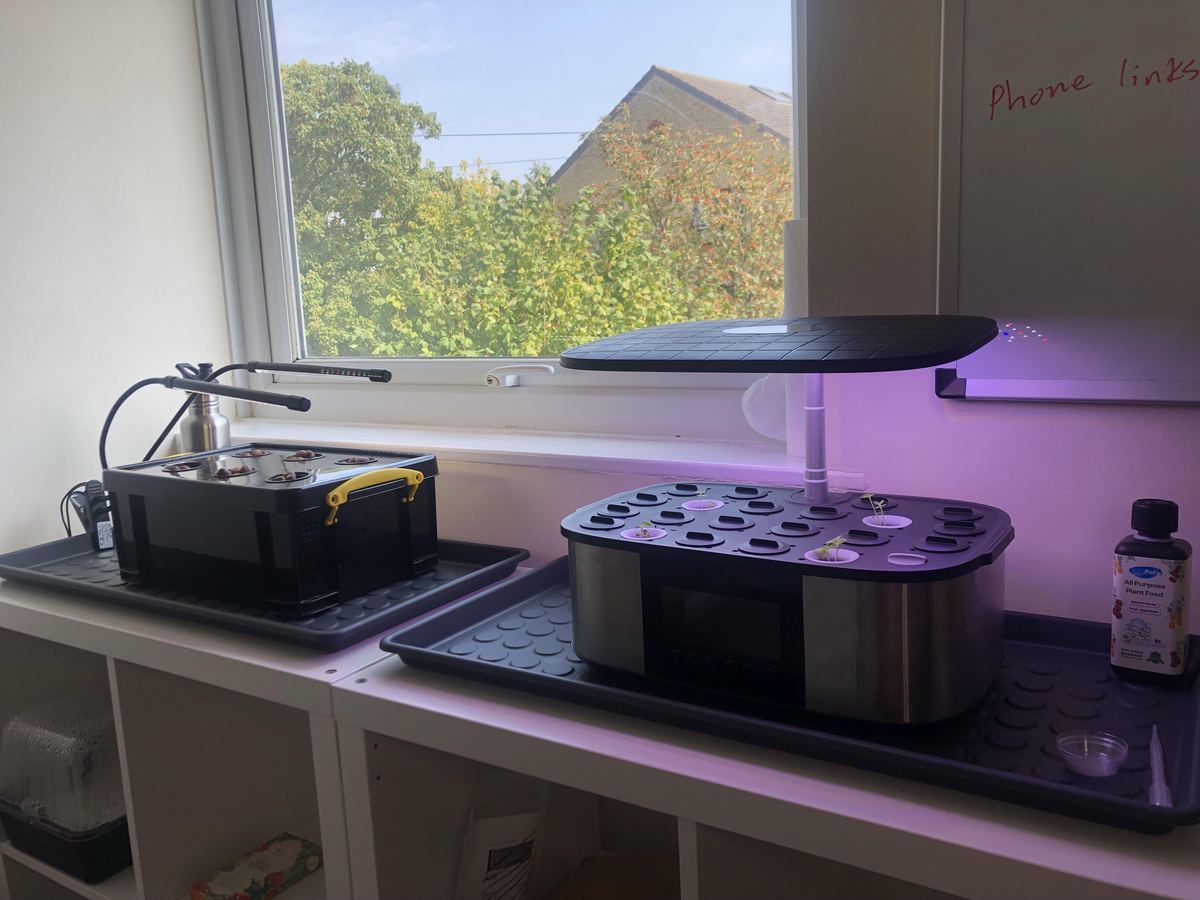
For a windowsill or worktop, you could have a small countertop kit with two to three litres of water reservoir for growing small herbs and leaves. That’s quite common for a windowsill or worktop.
You’ve also got the corner of a room. On the floor, that could be a larger system growing from the floor all the way towards the ceiling. That would work for leafy greens or taller plants like chillies.
A spare room or cupboard works for bigger systems that aren’t going to get in the way of your day-to-day activities and can also have good airflow. Noise doesn’t really matter too much there, so it could perhaps work for larger crops or a larger volume of crops.
The last one is a pseudo-outside space, like a greenhouse or conservatory, where you’re going to get a lot of free light and heat.
With each setup, you also want to think about how heavy it is to empty. You will need to refresh the water. How often you’re going to refill it depends on how big it is and what you’re growing, and you also need to think about how much room that activity takes in terms of manoeuvring.
For example, I once had a 20-litre reservoir in a small office that was maybe two metres by three metres, and it was very difficult to manoeuvre a 20-litre bin full of water within such a small space. So do consider that.
What a kit costs in one year
Purchase price is the smallest of the three numbers you’ve got to consider. You can build your own pricing model in three parts.
You’ve got the kit, which is going to be anywhere from around £20 all the way up to £400 ($30 to $500), depending on how technical you want to get.
Then you have to consider the consumables or refills, so things like media, seeds, growing pods, nutrients, replacement parts and net pots.
Then you have to consider electricity. That’s LED wattage multiplied by how many hours per day you’re using it.
A long light schedule on a cheap kit can cost more to run than a shorter schedule on a better kit. It depends on how efficient the kit is.
LED lighting is a good option. It’s very efficient, and it shouldn’t be too expensive in terms of electricity. It’s not like you’re running a kettle. It’s not going to use anywhere near as much power as something that is designed to generate heat. The idea with LEDs is that they’re trying not to generate heat, so they’re very efficient.
I might calculate the initial costs, not because I’m worried that it’s going to be really expensive, but more out of curiosity. Then I’ll run the lights as I would any other light in my house: turn them off when they’re not necessary and leave them on when they are.
Most of the kits I have are on an automatic light cycle, so there is never any time when the lights are on when they shouldn’t be.
If I’m using a countertop kit, I don’t even worry too much about calculating the cost of the lighting because it’s such a small operation. If the lights are on a specific light cycle and I ever do want to calculate it, I know exactly how much electricity is being used because the lights are turning on and off on a schedule.
Working out the electricity (published figures)
Watts ÷ 1,000 × hours a day × days × the price of a unit of electricity.
| Worked example | UK | US |
|---|---|---|
| Light (maker’s figure, LetPot LPH-Max) | 36 W | 36 W |
| Hours a day (assumed) | 16 | 16 |
| Electricity in a year | about 210 kWh | about 210 kWh |
| Price of a unit | 26.32p (Ofgem price cap, October to December 2026) | 18.34¢ (US residential average) |
| Cost for the year | about £55 | about $39 |
Pods, growing sponges, refills and the lock-in question
First-time buyers can worry that what they buy is just going to end up in a drawer and not be used.
You can think of two different models: kits that sell you a machine, and kits that sell you a subscription with a machine attached.
The question you need to ask before buying is: can this machine take ordinary seeds, ordinary growing media or sponges, and ordinary nutrients? Or does all of the additional paraphernalia have to be proprietary and sold by the company that brands the system?
Seeds are unlikely to be an issue, but it can certainly happen with things like growing sponges that only fit in certain machines.
I’ve not come across a kit yet that doesn’t accept a particular type of seed. What you need to consider is the grow sponges or pods and net pots or baskets.
Certain machines will have particular-shaped baskets or net pots that fit particular-shaped growing sponges. That’s something you need to consider: whether you want the freedom to use any medium, or whether you’re happy with a specific shape or brand.
If there is a particular brand of sponge or nutrient refill you’re using and that brand isn’t available, are there alternatives? Are there third parties that provide those options? It’s something you need to consider.
Some signals that a system is trying to lock you into one ecosystem of branded goods would be a uniquely shaped pod that doesn’t seem universal across other systems, or a nutrient being described as though the system only functions with that nutrient.
When you’re at checkout, are you being asked to subscribe to the refills?
There are companies that have their own nutrient mix, and that might be much easier and more attractive for a consumer to use rather than looking at the thousands of other nutrition options.
I’ve bought systems in the past that are sold with their own nutrients and then put my own nutrients from another seller in there, and they’ve been just fine. That’s more something you might do once you understand the chemistry of hydroponic nutrition, which isn’t overly complicated.
Being locked into a particular system isn’t necessarily a bad thing either. If you want very few decisions to make and you’re happy being locked into a particular brand or ecosystem, go for it. It reduces a lot of the fuss. It just might be more expensive.
For example, I’ve used a LetPot system with the nutrients they offer, and I’ve also put in nutrients that I’ve bought from other places. Both have been fine.
I’ve done the same thing with the media sponges. I’ve used the media sponges that came with the kit, and then I’ve bought media sponges made from different materials. Some were coconut coir, while the ones that came with the kit were peat, I believe.
What you can grow in a kit
Is it just a toy or a novelty, or can you actually grow real food? That’s the question you’re probably thinking about when you purchase one.
Oftentimes you’ve probably seen big DIY or commercial setups, maybe on YouTube or in real life, and by comparison a countertop kit can look underwhelming.
However, they are not just a toy. They’re a completely valid way to grow food and practise hydroponics.
They’re really great for things like leafy greens and garnishes: things you’re going to use in the kitchen regularly and that you want fresh and constantly growing.
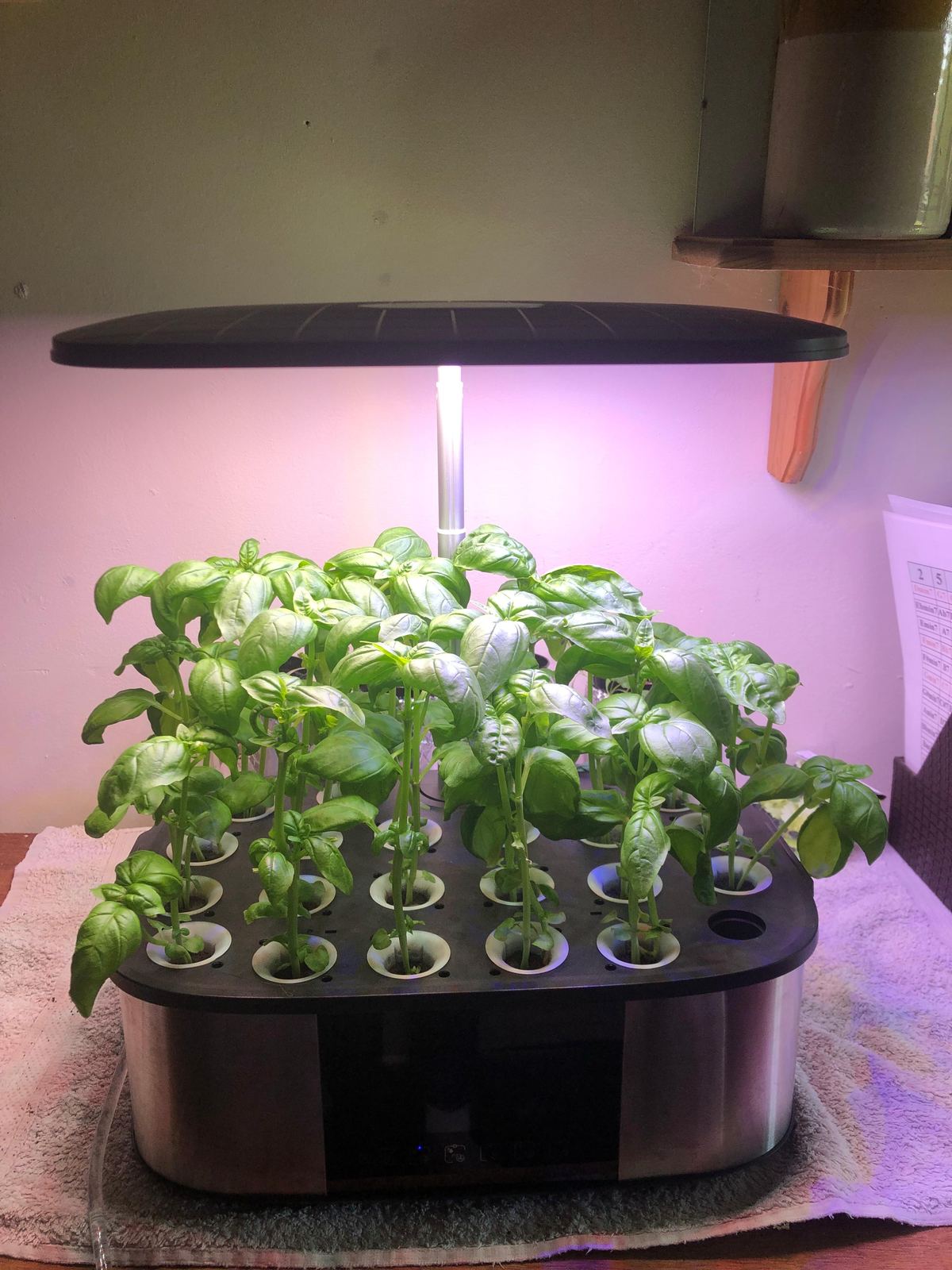
If you’ve got a kit that has six spaces to grow plants, for example, you’re going to have a regular supply of something like basil. If you’re growing basil and just using the leaves, you can keep that crop constantly producing and trimming with a relatively small countertop kit.
Fruiting crops, on the other hand, will still produce fruit and something you can eat, but it’s not going to be on a scale that produces food for every meal.
If you’re growing tomatoes in a small kit, you’ll yield a tomato plant that you can enjoy having tomatoes from once every couple of months, perhaps, or once every season, but it’s not going to be enough to sustain yourself.
If you’re looking to have a kit on your countertop, herbs and salads are your realistic bread and butter if you want something that is regularly producing and is going to contribute either to your sustainability practice or your pursuit of fresh herbs for cooking on a regular basis.
“Regular” is the operative word.
That said, from countertop kits I’ve grown things like pak choi, chillies, basil and lettuce.
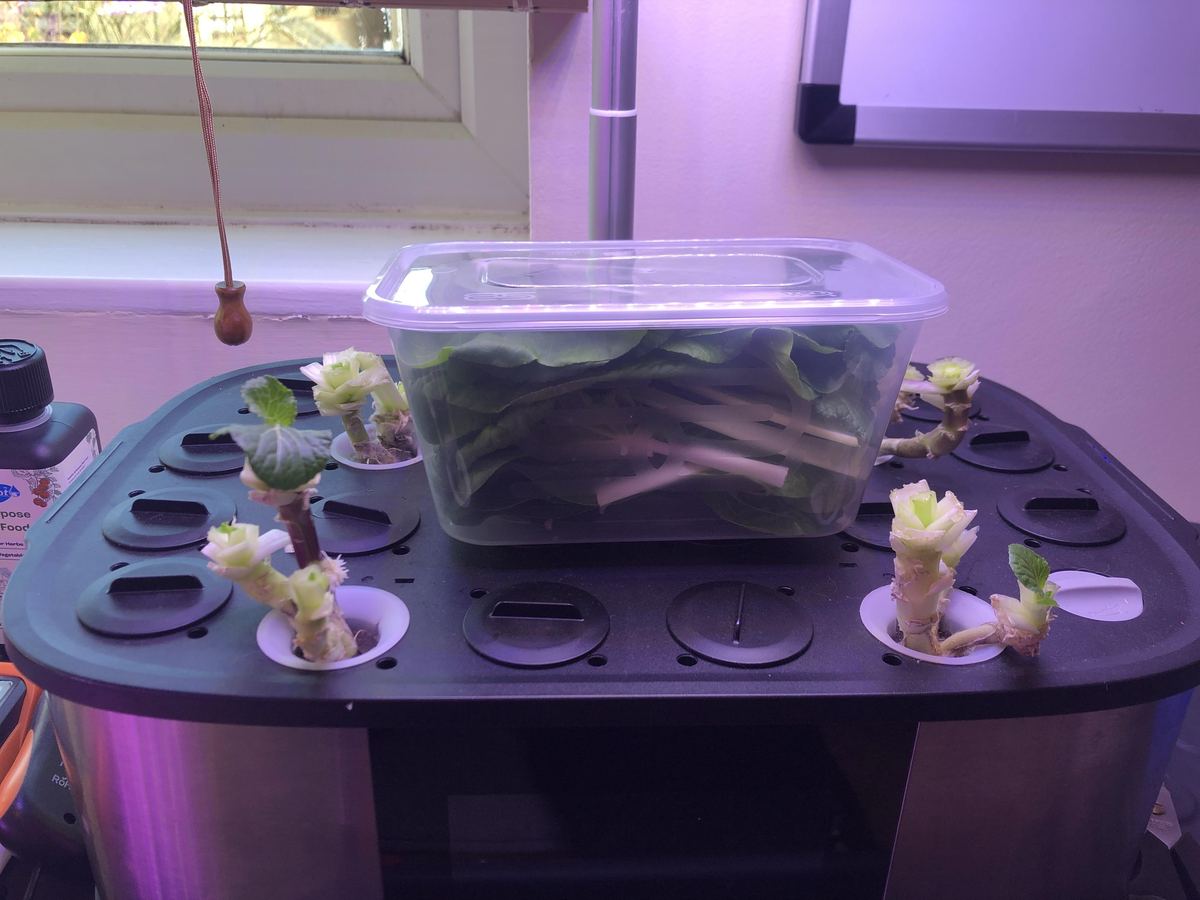
Chillies are a good example. They’re a fruiting crop, but they do continually fruit. They take a long time to start, but once they begin fruiting and you harvest that fruit, more grows.
Unlike tomatoes, where you’re probably going to want to eat quite a lot, chillies are generally used as an ingredient. You don’t usually eat large quantities of the whole chilli fruit. You’re cutting up small parts of it for a sauce or a garnish.
There are therefore fruits that do work with countertop kits in terms of having a meaningful regular harvest. Again, it depends on what your aims and goals are.
If you just want to grow tomatoes and enjoy them infrequently, then that’s not a problem.
For example, in my case, four heads of pak choi took about one to two months in a LetPot system. With the same system, I had around 10 to 20 chillies over the course of about three months, followed by continuous harvests after that.
Noise
Nobody really wants noise. You want a quiet system.
There are several possible sources of noise. You’ve got a pump vibrating if there’s a pump, fan noise if the system has a fan or you’ve added one, and sometimes lights can make noise as well.
The one that often surprises people is vibration from the pump, and this can be louder or quieter depending on the surface that the kit is sitting on.
You can reduce it by putting some sort of rubber mat underneath the kit or a towel, which will help absorb a lot of the vibration and dramatically reduce the noise.
You’re going to be affected most by noise in spaces that you frequent, like a kitchen, living room or bedroom.
For me, I had one of my loudest systems set up next to my bedroom. It wasn’t in the bedroom, but it was in my office next to the bedroom, and you could hear it from the bedroom at night when it was silent elsewhere.
I simply relocated the pump and made sure that it had as little surface contact as possible and that it was insulated by having some sort of soft surface to sit on.
The reduction in noise was significant. You could no longer hear it from one room to the other.
What a week looks like
Typically, when you have a small countertop kit, it doesn’t take much maintenance.
The idea behind them isn’t exactly “set and forget”, because if you do just set it and forget it, you will ultimately see your plants die if you’re not taking care of them. But it is very much “set and observe”.
You always need to keep an eye on the plants and how they’re responding to things like the light or the nutrition you’ve put in. If something is wrong, you need to correct it.
The main thing you’ll probably have to look out for with any sort of pre-built kit is the amount of water in it. You’re mainly looking at water and nutrition. If the water is getting low, you need to top it up.
For beginners, there are also things like measuring pH and EC. PH is how acidic or alkaline the water is, and EC is the nutrient density.
Usually, if you’ve got nutrients that are included or pre-measured by the manufacturer of the kit, the EC should be okay, but it also depends on the water where you live.
I’ve used pre-built kits, never measured pH, never measured EC, and been fine. But as you get more advanced, you want to start measuring pH and EC.
Another thing to keep an eye out for is algae growing in the water. If there is algae, it’s sapping nutrition and oxygen from your plants, and it’s going to cause a problem.
The way to avoid that is by making sure no unwanted light is getting to the reservoir.
From my own grows: my week with a LetPot
My own typical week using something like the LetPot system would be to have a little look in the reservoir once a week and make sure there’s no unwanted growth or algae.
The LetPot I was using comes with an app, so you can always see the water level. I would check that daily because it’s very easy to look at the app and check the water level.
Then I would physically look at the plants and see what the leaves were doing. Were the leaves dry or crispy? Were they looking bright green and healthy, or had they lost colour?
Sometimes they would get a bit brown if they were getting too close to the light above them, in which case I would raise the height of the light and make sure they weren’t getting burned or dried out.
Alternatively, if the plant you’re growing is getting quite high, it might be time to top it off, trim it down slightly or harvest it.
The kits, grouped by who they suit
In terms of the kits and systems I’ve actually used or run, I’ve used LetPot and AutoPot systems.
I’ve also built basic deep water culture systems and Kratky jars. I’ve bought NFT pipe kits, constructed them myself and then added parts, so those were a hybrid of pre-built and DIY.
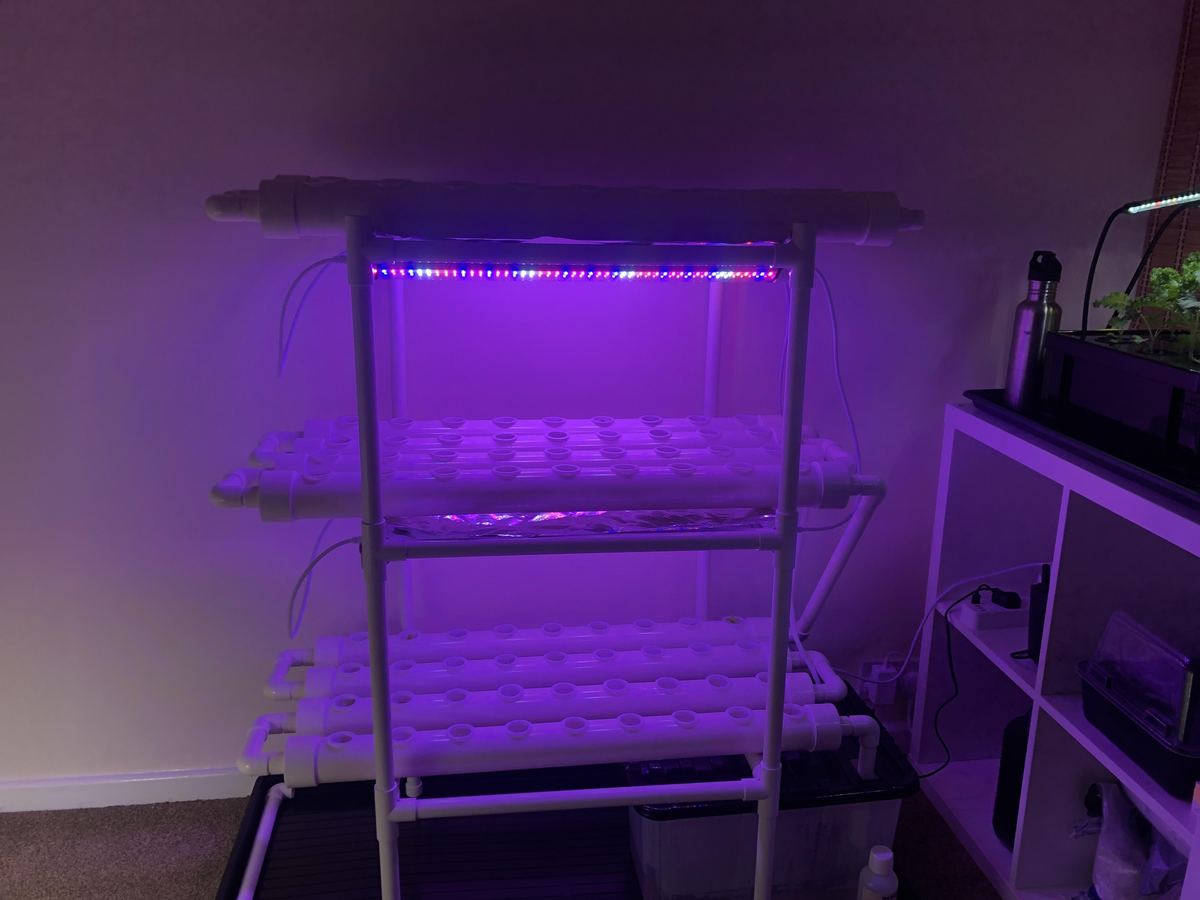
I’ve used vertical towers. I’ve used a vertical tower kit system with a reservoir at the base, a tall tower, and four LED strip lights coming down the side of the tower.
The smallest thing that works, for a worktop. If I were to group them into different use cases, the smallest thing that works for a worktop would be a LetPot system that’s designed to sit on a countertop and be used in a kitchen or on a sideboard somewhere.
Kratky jars also work on a worktop, as do small, roughly two-to-five-litre deep water culture buckets.
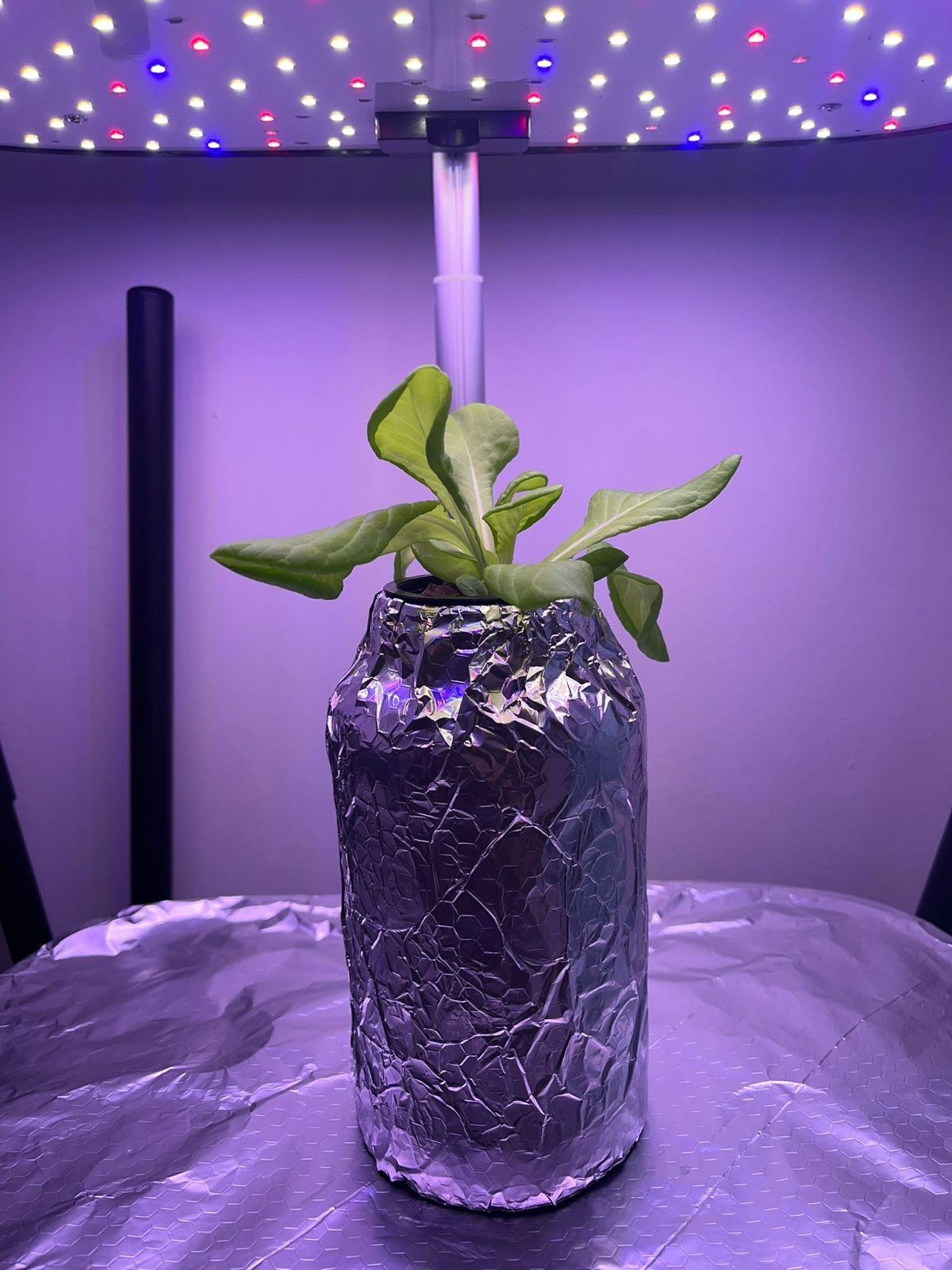
No decisions at all. If you’re looking for no decision-making whatsoever, go for something like a LetPot all-in-one system that comes with nutrients, comes with the media already and has lighting.
It’s plug-in and not “set and forget”, but “set and observe”.
Your own seeds and nutrients. For somebody who wants to use their own seeds and nutrients, any of the above work with your own seeds and nutrients.
A room where noise would be a problem. For a room where noise is going to be a problem, Kratky jars don’t make any noise and don’t require any power.
The same applies to the AutoPot system. It’s a gravity-fed, powerless reservoir.
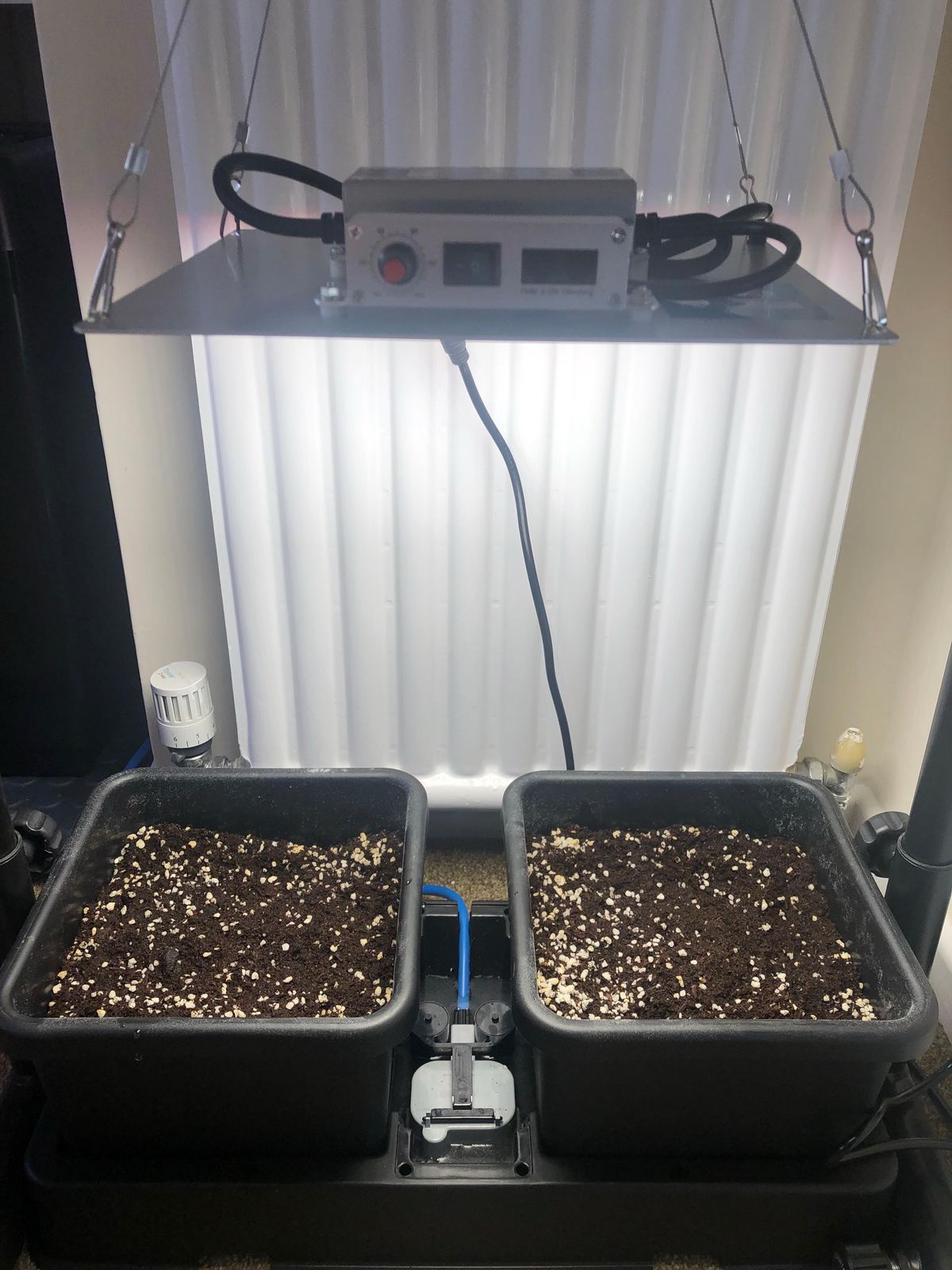
You could, as I did, put an oxygen pump in it, in which case it would make noise, but theoretically you don’t have to have that.
More than a couple of people’s salad. If you’re looking for more than just maybe a head of lettuce or some herbs and want something that’s actually going to grow a significant amount of crop, I would go with something like an AutoPot because it’s modular. You can expand it to as large as you want.
A vertical tower garden would also grow you a significant amount of crop in a small footprint because you’re growing upwards.
The same applies to NFT channel systems because you’re working with a long network of pipes running backwards and forwards.
If you imagine a drainpipe going forwards, backwards, forwards, backwards and up and down, you can fit a lot of crop into a smaller footprint.
The kits compared: published figures
Read from the makers’ own pages on 1 October 2026 (LetPot on 6 October 2026). All figures are the makers’. “Not stated” means the maker’s page did not say.
| Kit | Label | Plants | Tank | Light | Pump | Price |
|---|---|---|---|---|---|---|
| LetPot LPH-Max | Hands-on | 21 | 7.5 litres | 36 W | Yes | $251.99 |
| Click and Grow Smart Garden 3 | Researched | 3 | 1.5 litres | 8 W | None (wicks) | £124.95 / $124.95 |
| Click and Grow Smart Garden 9 | Researched | 9 | 4 litres | 13 W | None (wicks) | £199.95 / $249.95 |
| AeroGarden Harvest | Researched | 6 | Not stated | 20 W | Not stated | $109.95 |
| AeroGarden Bounty | Researched | 9 | Not stated | 40 W | Not stated | $229.95 |
| iDOO Home Garden Kit, 12 pods | Researched | 12 | 4 litres | 36 W | Yes, and a fan | $139.99 |
| Gardyn Home 4 | Researched | 30 | 15 litres | 2 × 40 W | Yes | $899 |
The Gardyn Home 4 is a floor-standing tower, 163 cm (64 in) tall.
Buying, warranty and returns
| Kit | Sold in the UK | Warranty | Returns |
|---|---|---|---|
| LetPot LPH-Max | Not stated | 1 year | 30 days, unused |
| Click and Grow (both) | Yes, own UK store | 1 or 2 years (its pages differ) | UK 14 days, 30 if unused. US 30 days |
| AeroGarden (both) | Own site ships to the US only | 1 year | 30 days |
| iDOO Home Garden Kit | Not stated | 1 year | 30 days |
| Gardyn Home 4 | No, US only | 3 years | 90-day trial |
When a kit is the wrong answer
DIY is a better answer than a kit if you’re looking to get more satisfaction from the entire process and want to learn more about the mechanics and engineering behind hydroponics.
Additionally, if you want larger crop sizes, you’re going to need to build something bigger yourself, which will have DIY elements to it.
For example, if you’re looking to make a business or become a commercial grower, pre-built kits aren’t really going to do it for you. You need something bespoke that is better fitted to growing a larger volume of crop.
A kit is also going to be the wrong answer for you when simply giving any input into growing is too much.
If you can’t spare ten minutes, then perhaps this option might not be for you. You might be able to get away with it, but you do need to give some attention to your plants if you want them to grow.
And plainly, if none of the popular options passes the seven checks for you, that’s a valid result. It’s not a failure to choose one.
It might be that another method of hydroponics is more appropriate for you.
Indoor hydroponic kits: questions and answers
What should I compare when choosing a kit?
I think when you’re comparing kits to buy, you should consider how much you want to grow, how much involvement you want with the kit, and how much you’re willing to spend.
You also want to think about footprint, plant-height clearance, light strength, reservoir size, cleaning effort, and whether refills lock you into a brand.
Are kits worth it compared to a simple DIY system?
Definitely yes.
For me, having a kit early on in my hydroponics journey was really helpful because it cut out a lot of the things that I was yet to learn.
Then, when I understood the fundamentals of hydroponics, I was able to think, okay, now I know how to approach a DIY system.
What can I realistically grow?
With a kit, you’re able to grow leafy greens or fruiting plants.
You just have to be realistic about how many you’re going to grow, their ultimate size and the frequency at which you’re going to harvest them. It’s going to be lower than with a bigger system.
Can I grow tomatoes or peppers?
Yeah, definitely. I’ve grown fruiting plants, and it works.
How many plants can I grow at once?
This totally depends on the system. Some systems have space for 20 plants, and some have space for six.
Ultimately, if the plants are growing close together, they will compete for light and nutrition.
Even if there is space for 20 plants, you might ultimately only end up having ten that are healthy because the others have been outcompeted.
How much countertop space does a kit need?
It depends, but you’re thinking of roughly a shoebox-sized area.
How noisy are they?
If you’re just running LED lights, they’re not very noisy at all and are barely audible.
If there’s some sort of pump, yes, you will be able to hear the pump. But many systems have the pump on some sort of timer, so they’re not necessarily always running.
Do kits smell?
A healthy reservoir should not smell.
If your kit does start to smell, it’s an indication that something’s not quite right, usually that there’s perhaps not enough oxygen in the water and you’re growing some sort of bacteria in there.
Alternatively, in a positive way, they will start to smell of whatever crop you’re growing.
If you’re growing basil, for example, you’ll start to smell basil in the room, which can be quite pleasant.
How much maintenance do they require each week?
It depends on what you’re growing and how much involvement you want, but ultimately very little.
In the same way, if you’ve grown plants in soil before, sometimes you can just put them there, leave them and trim them; it’s the same with hydroponic kits.
But the more involved you are, usually the better your plants will be.
How often should I clean the reservoir?
It depends.
Clean it after each full harvest. If you’re planning on growing something new, clean the reservoir.
Outside of that, you might drain it and refill it regularly. For a full clean with soap, etc., I usually only do that when I’m changing the entire crop and resetting the system.
Do I need to measure pH and EC?
With hydroponics, ideally yes.
But if you’re just starting out and you’ve got a kit that claims to be doing most of the work for you, I think you can trust that to an extent. I’ve trusted it in the past.
I’ve put water in from my tap, added nutrients, and not measured it as an experiment.
But in my day-to-day hydroponics practice, I would always measure pH and EC.
You can get away with not doing it, but if your plants start to show signs of decay or illness, keeping track of the EC and pH can be useful because you can see whether changes in EC and pH correlate with the health of the plant.
Can I use my own nutrients?
Yes, absolutely. I’ve not yet encountered a situation where I couldn’t.
Can I use my own seeds?
Yes. I’ve never encountered a situation where that’s not possible.
How much electricity does one use?
It totally depends on the running time, but you can check the box. It will tell you the wattage of what you’re using, and then you can calculate the cost based on the price of your electricity and how long you run it for.
You can calculate the wattage multiplied by the number of hours used per day.
Should you put it on a sunny windowsill or away from sunlight?
It depends on how much control you want.
If you’re being very strict about the lighting schedule, keep it away from a window because then you can completely dictate how much light it’s getting based on the LED.
But if it doesn’t have an LED, then it’s essential to keep it near a window so it actually gets sunlight.
Countertop kit or vertical tower?
It depends.
If you only have a small amount of height, then go for a countertop kit.
But if you have a room where you can have a kit on the floor going all the way towards the ceiling, then you’re going to get a lot more out of a vertical tower than a countertop kit.
A countertop kit is probably more beginner-friendly, requires less cleaning and needs less space.
Which features matter most for beginners?
When I started out, one of the main things I didn’t want to have to deal with was buying a lighting system and a timer system and setting all of that up.
Having a kit with a built-in LED lighting system that also had a timer was great. That saved a lot of trouble for me.
How do I prevent algae?
Basically, block all light from reaching the reservoir.
You don’t want light energy getting to the water and allowing algae to photosynthesise and grow.
The reservoir is full of food, and as soon as light makes contact with it, it’s going to allow algae to bloom and thrive. That will be a disaster for your plants.
Do kits attract pests?
Yeah, they can.
But if you keep on top of cleaning away any dead leaves and have good ventilation, pests shouldn’t be too much of a problem.
Like with any plants, they can attract insects because they’re a source of food.
What do I do when plants get too tall for the light?
You can raise the height of the light or top the plant and cut it shorter.
One email a month from me, Charlie. What is new on the site, my answer to one grower’s question, and the latest video. No spam, no selling.


I’m Charlie, co-founder of Everything Hydroponics. I’ve completed an official qualification in hydroponic cultivation, I run the Everything Hydroponics YouTube channel, and I’ve advised and taught many new and existing growers. I’m a teacher at heart, so what you read here is backed up by peer reviewed research and presented in a digestible way. Most of my growing time now goes on chillies. More about Charlie
You might like these
DIY Indoor Hydroponic Herb Garden
Growing herbs hydroponically in the house is simple. Here is a great guide on building and managing your own indoor hydroponic herb garden.
Hydroponic Herb Garden Kit - A Great Alternative to DIY
Building your own hydroponic system is a great idea, but not everyone has the time or resources to do so. A hydroponic herb garden kit is a great alternative!
DIY Hydroponics and Kits - Projects and Kit Guides
DIY hydroponics projects and ready-made kits in one place: build a grow light stand or shelves, set up a herb garden, or pick the right indoor hydroponic kit.