Do You Need an Air Pump for Hydroponics
- Home
- Hydroponic Systems
- Air Pumps

You've probably heard that many hydroponic systems have air pumps and you might be wondering what they are for and whether your system needs one. Oxygen is very important for plants, but what most people don't realise is that it's just as important to the roots of plants as it is to the leaves. In hydroponics, air pumps are typically used in conjunction with air stones in order to oxygenate plants' roots. However, not all hydroponic systems need an air pump. In fact, most don't. In this guide I'll cover why it's important to oxygenate your plants' roots and whether your system needs an air pump. So, without further ado, let's take a look how air pumps in hydroponics work and why they are important.
How Air Pumps in Hydroponics Work
As mentioned previously, both the leaves and roots of plants need oxygen. And while plants' leaves can get oxygen no matter whether they grow in hydroponics or in soil, plants' roots can't easily get oxygen in hydroponics since they are submerged in water in most cases.
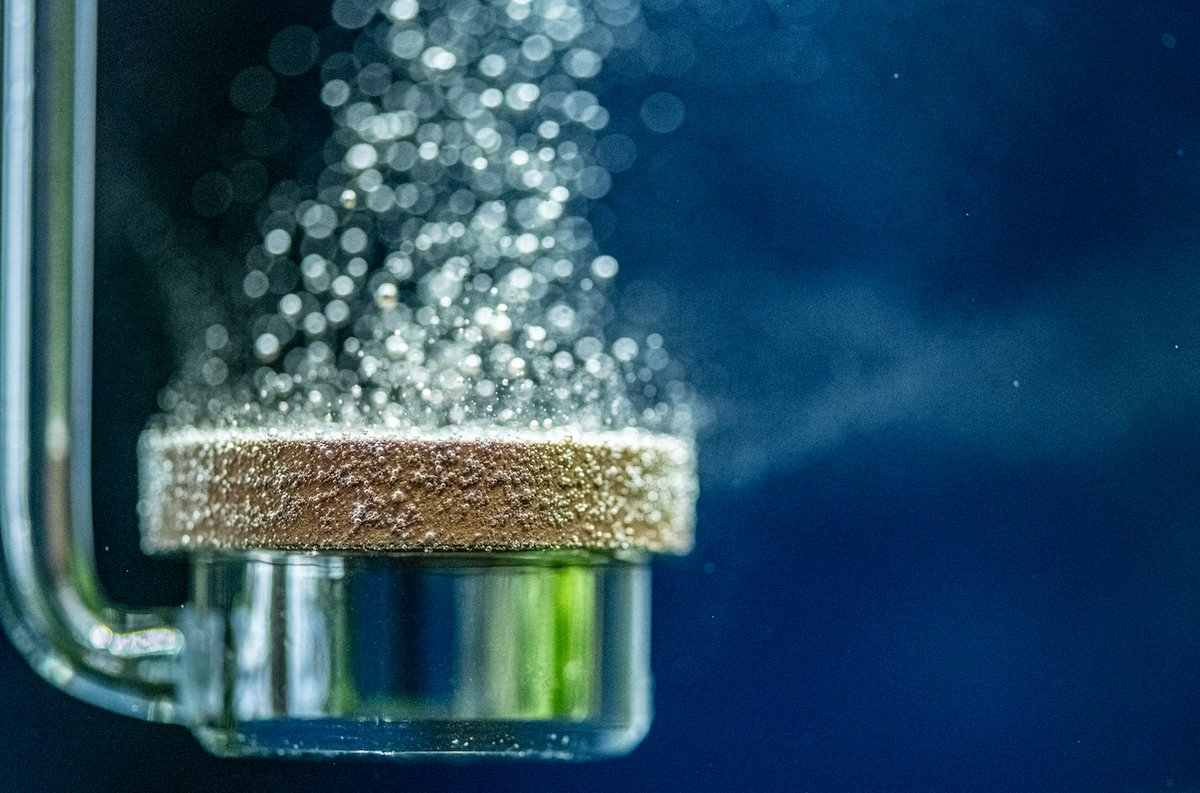
That's where air pumps and air stones come in. An air stone is typically placed in the reservoir and connected via tubing to an air pump, which brings in fresh air, makes lots of bubbles, and oxygenates the nutrient solution. This way, plants' roots can get the oxygen they require even when they are submerged in water. Depending on your reservoir size, you might need more than one air stone.
With that said, air pumps are not required for all hydroponic systems. Let's take a closer look at which systems need an air pump, which can benefit from it, and which ones don't need it.
Do I Need to Oxygenate My Hydroponic System?
Deep water culture (DWC) systems are the only ones that absolutely must use an air pump. In DWC systems, plants' roots are constantly submerged in water, so there is no other way they can get oxygen apart from an air pump.
Kratky systems are completely passive. They are essentially a DWC system without an air pump because the roots are partially exposed to the air. They can benefit from having one, although this would technically make it a DWC system. Wick systems don't keep the roots of plants constantly submerged. Instead they draw the nutrient solution from the reservoir when plants need it, so they don't need an air pump, however, they could benefit from having one.
Drip, ebb and flow, nutrient film technique (NFT), and aeroponic systems will work without an air pump since the roots of plants are not constantly submerged in water. That said, having oxygenated water is always important. In drip systems, the nutrient solution slowly drips onto the growing medium, so the roots are never submerged in water and can breathe. In ebb and flow systems, plants' roots are submerged in the nutrient solution on a timer, and then it goes back to the reservoir, so the roots have some time to get some oxygen. In NFT systems, the nutrient solution flows through the channels but doesn't cover the roots fully. It's usually just a thin film of nutrient solution at the bottom of the channels (as the name of this type of system suggests). In aeroponic systems, the roots of plants are sprayed by a mist on a timer, so they have some time to breathe in between mistings.
In conclusion, DWC systems are the only ones that require the use of an air pump since the roots of plants are constantly submerged in water. Kratky and wick systems can benefit from having one, although it is not necessary. Drip, ebb and flow, NFT, and aeroponic systems do not need an air pump since plants' roots are not constantly submerged and can get oxygen from the air.
One email a month from me, Charlie. What is new on the site, one grower’s question answered properly, and the latest video. No spam, no selling.


I’m Charlie, co-founder of Everything Hydroponics. I’ve completed an official qualification in hydroponic cultivation, I run the Everything Hydroponics YouTube channel, and I’ve advised and taught many new and existing growers. I’m a teacher at heart, so what you read here is backed up by peer reviewed research and presented in a digestible way. Most of my growing time now goes on chillies. More about Charlie
You might like these
Deep Water Culture: Build A DWC System From A Storage Box
Deep water culture suspends roots in aerated nutrient solution. It needs very few parts, and this is how to build one and why it suits a first system.
Ebb And Flow Hydroponics: How Flood And Drain Systems Work
Ebb and flow floods the roots then drains them, because not every plant likes sitting in water. How the system works, and how to build one.
Wick System Hydroponics: The Simplest System To Build
A wick system draws solution up into the medium with no pump and nothing to fail. What it suits, what it cannot keep up with, and how to build one.