Hydroponic Drip Systems
- Home
- Hydroponic Systems
- Hydroponic Drip System
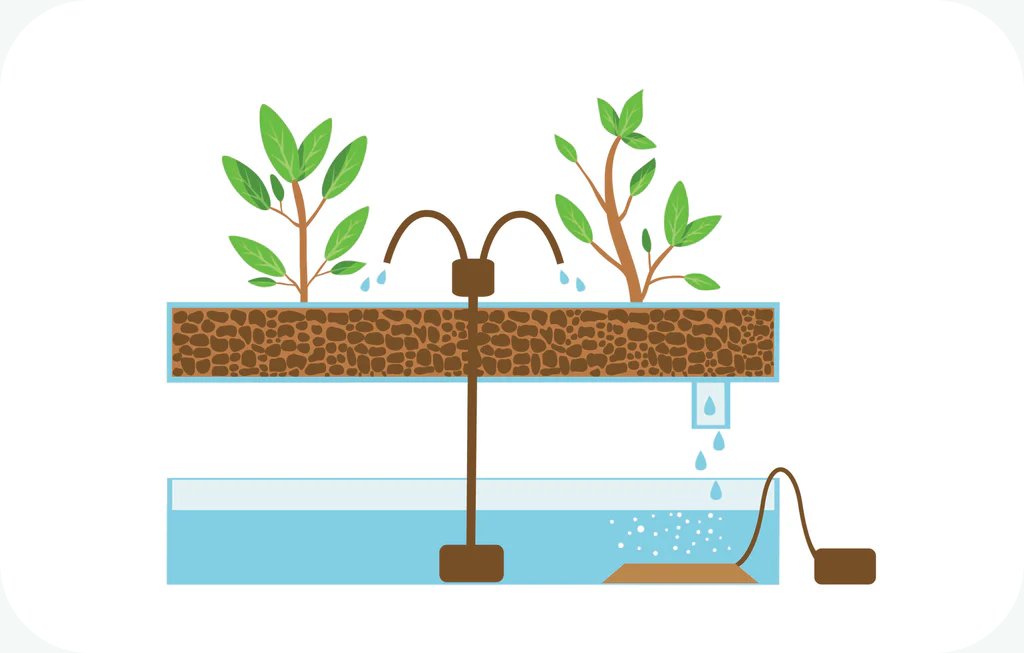
A hydroponic Drip system, often called a top-feed system, delivers nutrient solution directly to the base of each plant. The solution is pumped from a reservoir through tubing and released near the roots via small emitters. These emitters can be adjusted individually, allowing you to tailor the flow rate for each plant’s specific needs. Drip systems are highly adaptable, suitable for small home setups as well as large commercial installations, and can be modified easily if your growing requirements change.
Hydroponic drip systems fall into two main categories: recirculating and non-recirculating. In a recirculating (or recovery) system, excess nutrient solution drains back into the reservoir for reuse. This approach reduces waste but requires regular monitoring, as nutrient concentration and pH levels shift over time. A non-recirculating system allows runoff to exit the system as wastewater. Although this may seem less efficient, commercial growers use precise timing systems to minimise waste and maintain strict nutrient control.
Most hydroponic Drip setups use two pumps: one to circulate and aerate the nutrient solution within the reservoir, and another to push the solution through the tubing to the emitters. The solution then drips onto the growing medium, where the roots absorb it.
Because of their versatility and precision, Drip systems are extremely popular, particularly in commercial agriculture, and they remain a personal favourite for many experienced hobbyists. Home growers often choose recovery systems because they conserve solution, while commercial growers generally prefer non-recovery designs, valuing the improved nutrient consistency despite producing wastewater.
Your choice of growing medium influences irrigation frequency. Expanded clay pellets work well with continuous irrigation, while materials such as rockwool benefit from irrigating every three to five hours. Every garden behaves differently, so some experimentation is usually necessary to dial in the timing that works best for your plants.
Monitoring is essential in Drip systems. Plants draw nutrients from the solution, causing both nutrient strength and pH levels to shift. If the growing medium accumulates too many salts, it may need rinsing, or even replacing, to restore balance. Regular checks will prevent nutrient lockout and keep plants healthy.
Pros and Cons of Hydroponic Drip Systems
One of the strengths of Drip systems is the impressive variety of crops they can support. They are ideal for herbs, lettuces, leafy greens, tomatoes, peppers, cucumbers, strawberries, aubergines (eggplants), peas, and garlic. Larger plants. including melons, pumpkins, zucchinis, onions, and even fruit trees can also thrive in a well-designed Drip setup. The system can accommodate large quantities of growing medium and performs exceptionally well with peat moss, rockwool, and coco coir.
Scaling up is straightforward: you can expand your system with additional reservoirs, modify irrigation schedules, or even build vertical gardens and towers to maximise space. Drip systems adapt well to unusual or tight locations, allowing growers to position pots and tubing in creative configurations.
While highly reliable, Drip systems do require attention. Choosing to recirculate water increases maintenance needs because solution quality must be checked more often. However, the payoff is precise control over feeding and watering cycles. The components are affordable, and the system itself is less prone to catastrophic failure than some other hydroponic designs. That said, it may be more complex than necessary for someone just starting out; it often suits growers who have already mastered a simpler system and are ready to advance.
Maintenance tasks include monitoring nutrient and pH levels, flushing delivery lines to prevent clogs caused by plant debris, and inspecting pumps and hoses. The most common issue is leakage from tubing. A quick way to locate leaks is to press coloured tissue paper along the lines; the wet areas will darken, revealing the source. Replacement hoses and connectors are inexpensive, so it is wise to keep a few spare parts on hand for emergencies. Pump failure is another potential problem; if it stops working, plants immediately lose access to nutrients. A short daily check ensures everything is functioning correctly.
Overall, a hydroponic Drip system offers a powerful combination of flexibility, efficiency, and control. It is relatively inexpensive to set up, delivers excellent oxygenation, and allows precise management of irrigation cycles. For growers who enjoy experimentation and scalability, it can be the most rewarding hydroponic method.
Video Guide for Building a Hydroponic Drip System
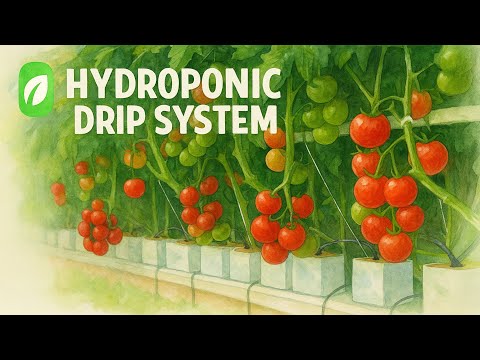
Building a Hydroponic Drip System
Recirculating (Recovery) Drip System
Excess nutrient solution drains back into the reservoir and is reused. This makes the system economical, but because the solution is recycled, nutrient concentration and pH levels must be monitored frequently. The setup requires the grow tray to sit above the reservoir so that gravity can return the solution.
Non-Recirculating Drip System
Excess solution drains away as wastewater rather than returning to the reservoir. This method is simpler but can lead to nutrient waste. Incorrect timer settings may also saturate the growing medium for too long, depriving roots of oxygen and potentially killing plants.
Drip emitter placement
One per plant (large plants may need more). Options include:
- Fast-flow emitters for mediums that don’t retain water well
- Pressure-compensated emitters for precise control (recommended)
- Perforated tubing as a low-precision alternative
Emitters prevent continuous nutrient flow, which would otherwise drown roots.
Tubing
½-inch black, light-proof vinyl tubing prevents algae growth. Use barbed connectors and PVC cement for secure, leak-free joints.
Submersible pump
Supplies nutrients to the emitters and aerates the solution. A pump with a filter helps prevent debris from entering the system. Choose a powerful pump if you plan to expand later.
Timer
Controls watering intervals. Working with flow valves and pressure regulators it allows you to fine-tune nutrient delivery.
Reservoir
Preferably black (or painted black) to prevent algae growth. Maintain the solution at 65-75°F (18-21°C) and mark the side to track nutrient levels easily.
Growing medium
Options include coco coir, rockwool, expanded clay pellets, perlite-vermiculite mix, or hydroton:
- Rockwool requires watering every 3-5 hours
- Hydroton supports continuous dripping
Growing container (tray or pots)
Ensure good drainage. For a recirculating system, include an outlet so unused nutrients return to the reservoir.
Air stone (optional but beneficial)
Increases oxygen content in the nutrient solution and improves nutrient uptake. Larger reservoirs may need multiple stones.
Hydroponic nutrients
Choose according to plant type and growth stage.
pH testing kit and adjustment solutions
Essential for recirculating setups, as pH levels drift over time. Incorrect pH can cause nutrient lockout and plant discolouration.
Tools
A drill, cutters, tape measure, shovels, PVC glue, and filter material are useful during assembly.
Assembly, Instructions, System, Calibration and Operation
-
Drill two holes in the reservoir lid: one for the airline and pump, the other for the tubing that leads to the drip emitters.
-
Connect the pump to the tubing and attach the emitters.
-
Add growing medium and plants to your containers.
-
Position the emitters inside each pot near the root zone.
-
Place the plant containers above the reservoir to allow excess solution to drain back.
-
Fill the reservoir with nutrient solution.
- Connect the timer to the pump.
For the first week, observe how wet your plants become and adjust the timer accordingly. Plants need enough solution to remain hydrated, but not so much that the medium stays saturated and oxygen cannot reach the roots. A common starting point is three watering cycles per day, saturating the medium each time. Mature plants and hot weather may require more frequent irrigation.
Between growing cycles, clean and sterilise the reservoir and tubing thoroughly. Residue can harbour bacteria and clog the system.
Growers producing large crops or running commercial systems may consider a UPS (Uninterruptible Power Supply) or generator to ensure pumps continue functioning during a power outage.
One email a month from me, Charlie. What is new on the site, one grower’s question answered properly, and the latest video. No spam, no selling.


I’m Charlie, co-founder of Everything Hydroponics. I’ve completed an official qualification in hydroponic cultivation, I run the Everything Hydroponics YouTube channel, and I’ve advised and taught many new and existing growers. I’m a teacher at heart, so what you read here is backed up by peer reviewed research and presented in a digestible way. Most of my growing time now goes on chillies. More about Charlie
You might like these
Deep Water Culture: Build A DWC System From A Storage Box
Deep water culture suspends roots in aerated nutrient solution. It needs very few parts, and this is how to build one and why it suits a first system.
Ebb And Flow Hydroponics: How Flood And Drain Systems Work
Ebb and flow floods the roots then drains them, because not every plant likes sitting in water. How the system works, and how to build one.
Wick System Hydroponics: The Simplest System To Build
A wick system draws solution up into the medium with no pump and nothing to fail. What it suits, what it cannot keep up with, and how to build one.