Aeroponics
- Home
- Hydroponic Systems
- Aeroponics
Aeroponic systems are more complex than other hydroponic setups and generally come with a higher price tag. They rely on advanced components and precise timing, which makes them more technical to assemble. However, their efficiency and space-saving design make them an appealing option for growers willing to invest in a more sophisticated system.
How aeroponics works
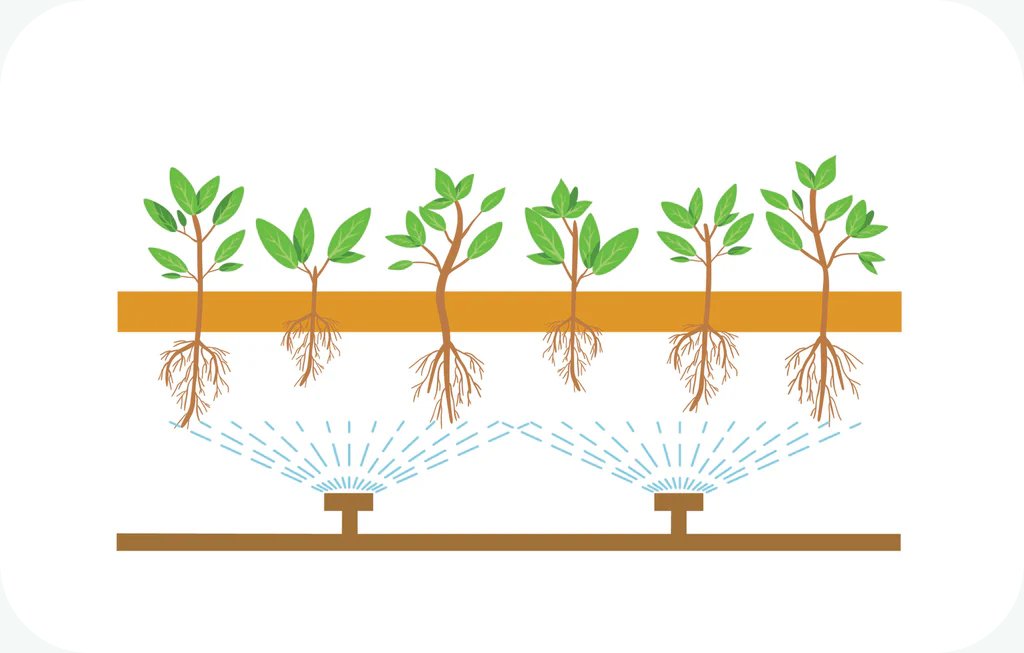
In an aeroponic system, plant roots are suspended in an enclosed chamber, often called an aeroponic chamber, rather than placed in a growing medium. The plants sit in flexible rubber collars positioned in holes on the system’s surface, which hold the stems securely while leaving the roots free in the open air. Beneath the plants, mist nozzles spray a fine nutrient solution directly onto the exposed roots. This creates a highly oxygenated environment that supports rapid growth.
Many aeroponic systems are designed as compact towers or cube-like structures. Nutrient droplets are released near the top, then fall down through the chamber, coating the roots as they descend. Because the roots are surrounded by oxygen rather than submerged in water, they can absorb nutrients efficiently while still breathing freely.
Benefits of Aeroponics
System Components and Maintenance
- Space-efficient: The vertical design allows multiple towers in a relatively small area, and they can be moved easily as needed.
- Clean and sterile: With no growing medium, there is less risk of soil-borne pathogens, and roots have unlimited space to expand.
- Faster growth: High levels of oxygen around the roots lead to accelerated development and impressive yields.
- Water-efficient: Aeroponics uses less water than most other hydroponic methods because excess solution drips back into the reservoir and is reused.
The reservoir stores the nutrient solution and usually contains an air pump to oxygenate the mixture. A separate water pump forces the solution through misting nozzles under pressure, creating the fine spray that feeds the roots. Any unused solution returns to the reservoir for recirculation.
Most plants can be grown aeroponically, although larger species require a deeper reservoir. These systems do require more upkeep than simpler methods. Misting nozzles may clog over time and must be cleaned regularly. Timers and pumps must be monitored closely, as any interruption in misting can cause roots to dry out rapidly. In a power outage, plants must be manually misted to prevent damage.
Irrigation Schedules
Aeroponics can operate in two ways:
- Continuous misting, where roots are constantly supplied with nutrients
- Intermittent cycles, where misting occurs briefly every few minutes, far shorter intervals compared to ebb and flow systems
These short cycles ensure roots remain moist and oxygenated without becoming waterlogged.
Suitable and Unsuitable Plants
Best choices for aeroponic systems include:
- Lettuce and leafy greens
- Tomatoes, peppers, aubergines/eggplants
- Strawberries and watermelons
- Ginger and edible flowers
- Herbs of many varieties
Not suitable:
- Root vegetables (e.g., carrots, beets), prone to rot in this environment
- Fruit trees, too large and heavy
- Plants that outgrow the system, may require transplanting as they mature
Costs and Considerations
Aeroponic systems cost more upfront due to the need for reservoirs, pumps, timers, misting nozzles, and pressure-rated components. Two pressure systems are used:
- Low-Pressure Aeroponics (LPA): Continuous or frequent misting
- High-Pressure Aeroponics (HPA): Short bursts of mist, often 5 seconds every 5 minutes
When selecting a pump, consider not just how many gallons per hour it can move, but its pressure rating (PSI), a key factor in producing a fine mist.
For beginners, purchasing a pre-made aeroponics kit can simplify the process considerably. If, however, you prefer a hands-on project, the next section will guide you through building your own DIY aeroponic system.
Hydroponics vs Aeroponics
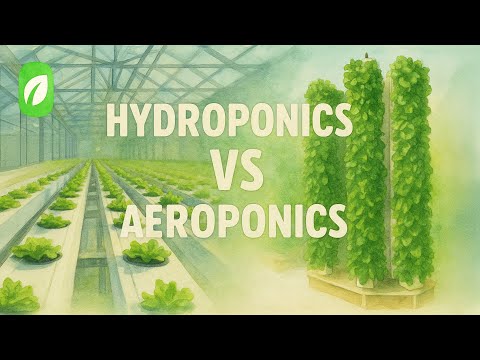
Many growers classify aeroponics as a branch of hydroponics, and while there are similarities, there is one essential distinction:
- Hydroponics involves roots in water, either fully submerged or periodically exposed to nutrient-rich solutions.
-
Aeroponics involves roots in air, fed by a fine nutrient mist rather than a flowing or standing solution.
For example:
In DWC (Deep Water Culture) systems, the plant roots are constantly submerged in a nutrient solution.
In Wick systems, a wick draws the nutrient solution from the reservoir and delivers it into the growing medium around the roots.
In Drip systems, the nutrient solution is dripped directly onto the growing medium, soaking the roots.
In Ebb and Flow systems, the grow bed periodically floods with nutrient solution and then drains, allowing the roots to take in both nutrients and air.
In NFT (Nutrient Film Technique) systems, a thin film of nutrient solution flows continuously over the roots.
In Aeroponic systems, the roots are never placed in water; instead, they are suspended in air and misted or sprayed with nutrient solution.
In aeroponics, plants sit in flexible collars, suspended above a chamber where misting nozzles deliver nutrients directly to exposed roots.
Plant Growth and Health
Aeroponics generally produces healthier and faster-growing plants. Because the roots are suspended in air, they receive an exceptional supply of oxygen, which dramatically increases growth rates and nutrient uptake. Hydroponic roots, although well-fed, are surrounded by water and receive much less oxygen.
Hydroponic systems also create more humid, enclosed environments. This increases the chance of bacteria forming on roots or in the growing medium. Aeroponic chambers, by contrast, remain relatively sterile, there is no growing medium to harbour pathogens, and airflow reduces humidity buildup.
Nutrient Absorption
Research consistently shows that aeroponic plants absorb nutrients more efficiently. One example comparing nutrient absorption in lettuce revealed:
NutrientHydroponicsAeroponicsNitrogen2.13%3.29%Phosphorus0.82%1.25%Potassium1.81%2.46%Calcium0.32%0.43%Magnesium0.40%0.44%
These figures illustrate why aeroponic systems often yield faster, larger harvests.
What Can You Grow?
Hydroponics offers greater crop flexibility.
Aeroponics can successfully grow:
- Leafy greens, lettuce
- Herbs
- Tomatoes, peppers, aubergines/eggplants
- Strawberries and watermelons
- Edible flowers
-
Ginger
However, aeroponics cannot support:
- Root vegetables (e.g., carrots, beets)
- Fruit trees or large woody plants
-
Very heavy crops without additional infrastructure
Hydroponics, on the other hand, includes several system designs, such as ebb and flow and drip systems, that can support root crops and trees, allowing a much broader range of produce.
Setup Costs
- Aeroponics is more expensive upfront. It requires pumps, misting nozzles, chambers, and high-pressure systems.
-
Hydroponics is more budget-friendly and DIY compatible. Many hydroponic systems can be built from household items, while aeroponic systems are more complex.
Aeroponics does save money long-term by eliminating the need for growing media, but the initial investment is higher.
Maintenance Requirements
Aeroponics demands more monitoring:
- Pumps and timers must be checked frequently.
- Misting nozzles can clog and require cleaning.
- If power fails, plants must be misted manually to prevent root damage.
Hydroponic systems also require upkeep, especially those with pumps or drip emitters, but they are typically less demanding than aeroponics.
Which Is Better?
Growth speed: Hydroponics offers good growth rates, while aeroponics provides excellent growth and typically faster results.
Water efficiency: Hydroponics uses water efficiently, but aeroponics is even more efficient, requiring significantly less water.
Crop variety: Hydroponics can support a wide range of crops, whereas aeroponics is more limited in the types of plants it can grow.
Cost: Hydroponic systems are generally cheaper to set up, while aeroponic systems tend to be more expensive.
Maintenance: Hydroponics requires a moderate amount of upkeep, while aeroponics demands a high level of monitoring and maintenance.
DIY-friendly: Hydroponics is very DIY-friendly, with many systems that can be built using common materials. Aeroponics is less suited to DIY builds and usually requires specialised parts.
Hydroponics: More versatile, cheaper to set up, easier to maintain, beginner-friendly.
Aeroponics: More efficient, faster growth, higher nutrient absorption, lower disease risk.
Ultimately, your choice depends on your goals:
- If you want rapid growth and cutting-edge efficiency, go aeroponic.
- If you want simplicity, versatility, and lower costs, hydroponics is the better starting point.
One email a month from me, Charlie. What is new on the site, one grower’s question answered properly, and the latest video. No spam, no selling.

I’m Charlie, co-founder of Everything Hydroponics. I’ve completed an official qualification in hydroponic cultivation, I run the Everything Hydroponics YouTube channel, and I’ve advised and taught many new and existing growers. I’m a teacher at heart, so what you read here is backed up by peer reviewed research and presented in a digestible way. Most of my growing time now goes on chillies. More about Charlie
You might like these
Deep Water Culture: Build A DWC System From A Storage Box
Deep water culture suspends roots in aerated nutrient solution. It needs very few parts, and this is how to build one and why it suits a first system.
Ebb And Flow Hydroponics: How Flood And Drain Systems Work
Ebb and flow floods the roots then drains them, because not every plant likes sitting in water. How the system works, and how to build one.
Wick System Hydroponics: The Simplest System To Build
A wick system draws solution up into the medium with no pump and nothing to fail. What it suits, what it cannot keep up with, and how to build one.