Which hydroponic kits grow a meaningful amount of food?
- Home
- DIY & Kits
- How Much Food
I’m sure you’ve seen big hydroponic systems, and then you’ve seen small countertop systems the size of a toaster. And you want to know: will this small system actually grow anything that I would be able to eat?
The short answer is yes.
For things like herbs, salads and small amounts of fruiting plants, definitely. It’s not going to host an entire vegetable garden simply because of its size, but that doesn’t mean it’s not worth using or that it can’t be incredibly rewarding and valuable.
I’ve harvested many things from small countertop systems, including repeated chilli harvests. After two to three months, I’ve been able to harvest around 10 chillies every successive month or so.
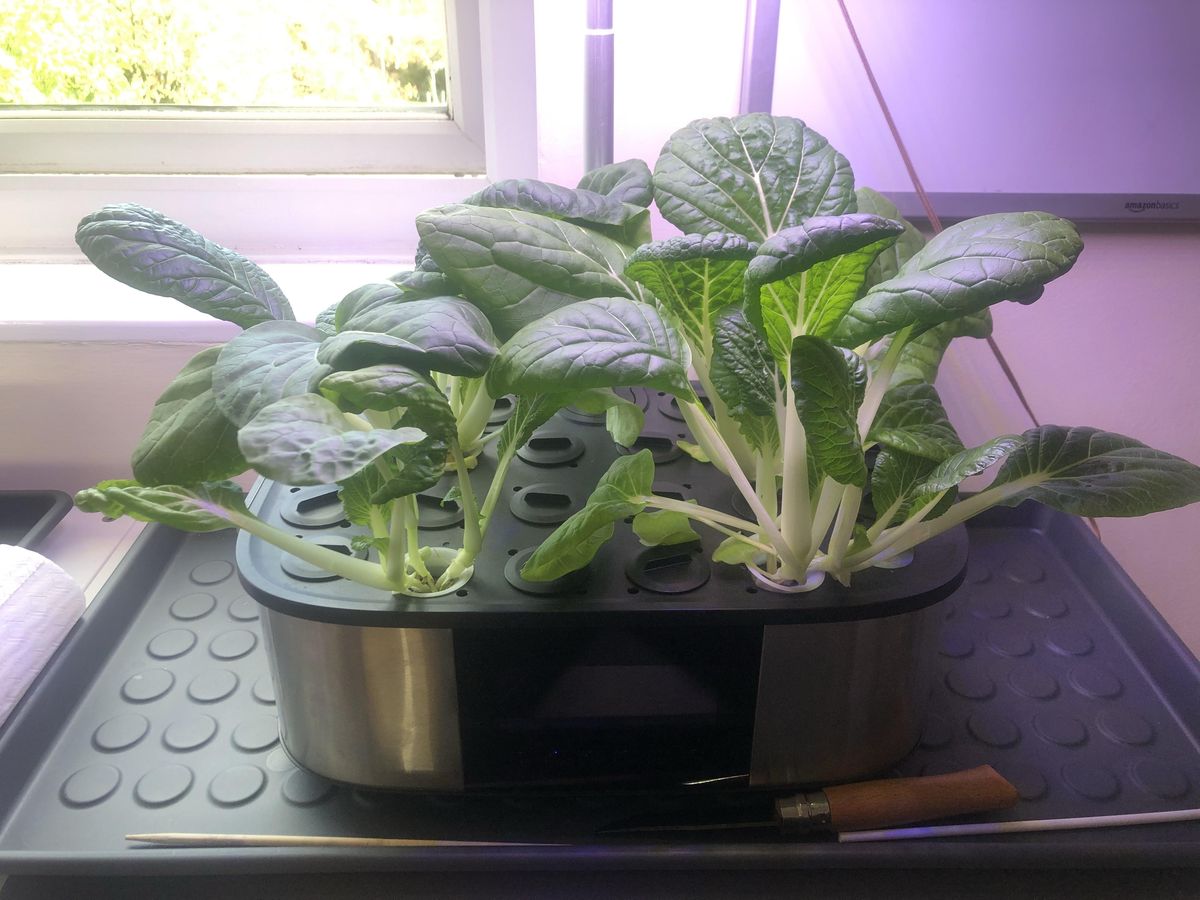
I’ve also grown full heads of pak choi and lettuce. The amount you can grow depends on how many available spaces there are in the system. The one I was using had six spaces, and I grew four full heads of pak choi over the course of about a month.
Pak choi, for example, will certainly feed you, but it’s not going to keep growing after you’ve harvested the whole plant. You would have to start again.
Chillies, on the other hand, are different. You’re not looking to feed yourself solely on chillies, but they work perfectly in the quantities you’re growing them for their intended purpose, which is as an ingredient or garnish.
You can continually harvest them without having to buy them. In my case, I had too many, so I was freezing them for future use.
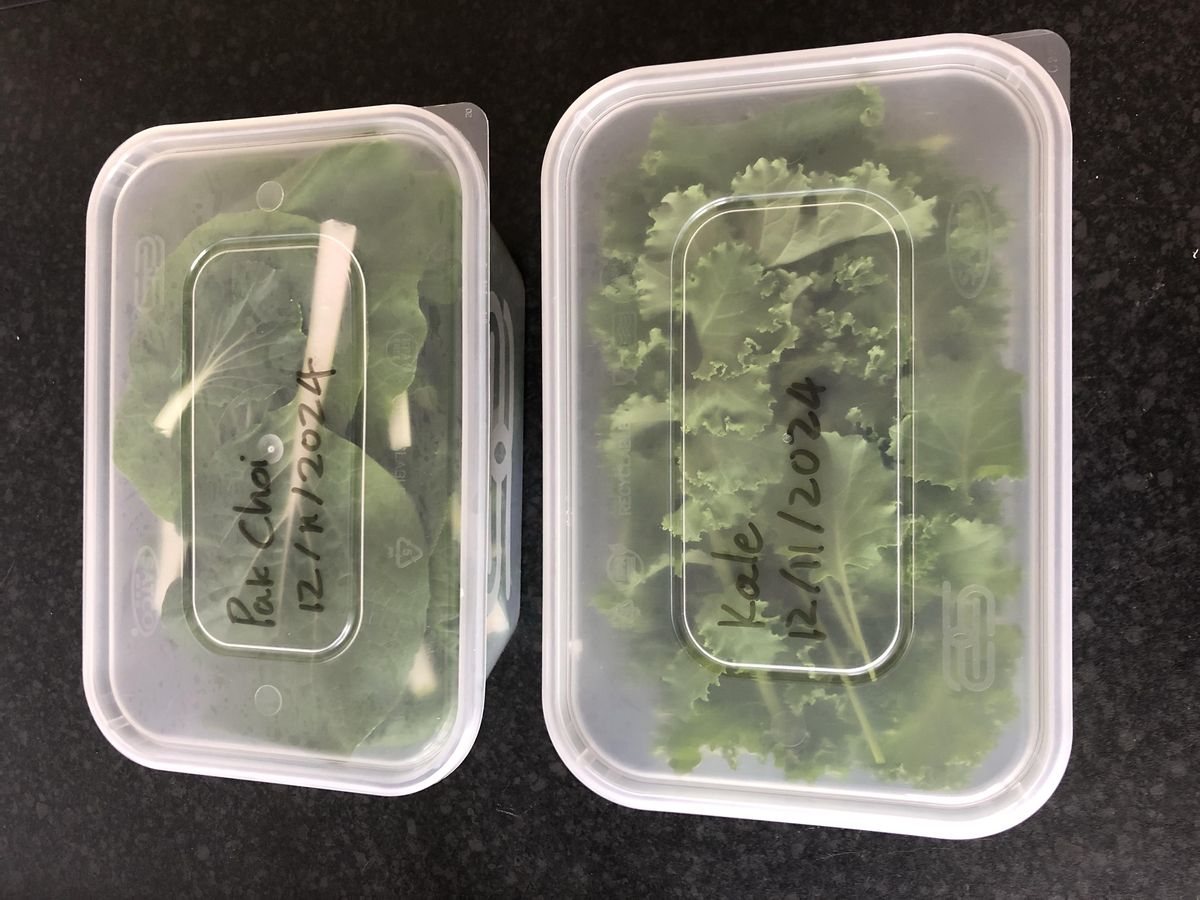
How much food a countertop kit grows, at a glance
- My harvests: four full heads of pak choi over about a month; around 10 chillies every month or so, after two to three months.
- Most countertop kits land in: the garnish or useful tier.
- Best return per pod: basil, parsley, coriander and mint; small leafy vegetables, like lettuce and rocket.
- Spacing: basil or coriander in every slot; lettuce or pak choi in around half the spaces.
- The wrong buy: salad for your family, or any real quantity of fruiting crops.
Where I’d start
For somebody who wants real food from their first kit, rather than just a novelty item, I would recommend something like one of the LetPot systems, or a LetPot-style system.
Ideally, you want something that has an included light and comes with nutrients and some form of growing medium, so that you have everything you need.
As for size, anything between eight and twenty growing spaces, depending on what you’re looking to grow.
If I was going to pick crops, I would choose some form of leafy green, like a salad green, and then a herb or garnishing green, like basil or coriander.
If you’re growing something like basil or coriander, I would fill every available slot.
If you’re growing something bigger, like lettuce or pak choi, you might need more space. In that case, I would use around half the available spaces to make sure each crop can grow to a good size.
The kits named on this page
| Kit | Label |
|---|---|
| LetPot | Hands-on |
| AutoPot | Hands-on |
| Click and Grow Smart Garden | Researched |
| iDOO 12-pod | Researched |
What meaningful means in servings
When we think about a meaningful amount of food, I think it’s enough of one crop that you would stop buying it.
For example, with salad leaves, that’s roughly 30 to 50 grams per person per day. So, for a bowl of salad every day for one person, you’d need around 250 to 350 grams a week.
For herbs, it’s different.
A single healthy basil plant will give you more than most households use. Here, meaningful means having fresh herbs on hand every day, without a supermarket packet going slimy in the fridge or being forgotten about.
Plus, the flavour of herbs like basil and coriander, freshly trimmed from a live plant, is much better, in my opinion, than something that isn’t fresh.
I think there are three different tiers you could put yourself into.
Garnish, useful or meaningful
| Tier | What you get |
|---|---|
| Garnish | a few leaves a week |
| Useful | herbs daily or enough salad for two or three meals a week |
| Meaningful | enough for a full salad most days |
Most countertop kits are going to land you in those first two tiers: garnish or useful.
Four heads of pak choi a month sits towards the top end of useful, although it’s unlikely that you’re going to get all four heads to full size in under a month every time.
Realistically, it’s going to take a bit longer than that, and you might want to leave them growing even longer if you’re looking to push their size.
Even then, it’s mainly going to provide a side dish or side salad every once in a while.
What decides the harvest? Is it the pod count?
When I refer to pod count, I mean the number of slots or growing spaces in a system, sometimes called pods.
Pod count is often what you’re going to be sold on when looking at these kits, but it’s not always the most useful number to think about.
If you fill every pod in a 20-pod system, depending on what you’re growing, the plants are going to overcrowd each other. They’ll compete for light, space and nutrients, especially with larger plants.
For example, imagine a kit that’s 30 centimetres by 20 centimetres and has twenty growing spaces. If you’re trying to grow full heads of lettuce in every one of those spaces, it’s just not going to happen.
You’re going to need to space them more evenly, depending on the full size of the crop you’re growing.
You might only be able to use ten of those spaces, or even five or four. But if you’re growing something smaller, like basil or coriander, you could fill more of them.
There are three things that are going to matter most when you think about your yield.
Light
Roughly 20 to 25 watts of LED lighting over a countertop kit is enough for herbs and cut-and-come-again leaves, like basil and coriander, but it’s not always going to be enough for a full head of lettuce or something that’s fruiting, because they require more energy.
Some small kits run at about 13 watts, like the Click and Grow Smart Garden, while others run at about 22 watts, like the iDOO 12-pod system.
The more powerful your light is, the more energy the plants receive. They can produce more glucose through photosynthesis, which then allows them to respire and grow.
Root space and water volume
The next thing you need to consider is how much space your roots will have in the reservoir and the volume of water available.
A four to six-litre tank shared by nine to twelve plants is only a fraction of a litre each. You’re splitting the available water between every plant.
Leafy crops can manage, but fruiting crops are going to struggle because of their demand for water.
If the plant you’re growing has a particularly large root network, you also need to remember that it’s going to drain the tank very quickly.
So you need to be able to refill it regularly or get a system that automatically refills itself from another source.
Height clearance
You need to be able to have the light around 25 to 45 centimetres above what you’re growing, because you don’t want it to damage the leaves, burn them or dry them out.
At the same time, you need to think about how tall the crop you’re growing is going to become.
Can you continuously raise the light as the crop grows to full maturity?
What each kind of setup honestly gives you
Small countertop kits, like LetPot, iDOO and Click and Grow, are generally pretty easy to move, empty and refill.
I would say the reservoirs hold around five litres of water at most, so that’s about five kilograms of water. It’s not too much to move or empty.
They’re also all roughly shoebox-sized, maybe a bit bigger. They’re quite discreet, or at least they occupy about the same amount of space as typical kitchen equipment like a toaster, microwave or blender.
From the ones I’ve used, mainly the LetPot, they’re not particularly loud.
The exception is when the system is automatically refilling itself, which happens rarely. At that point, you’ll hear a pump making a fairly loud vibrating noise for maybe 30 seconds.
That might happen once every few weeks or so, so it’s not an issue at all.
When it comes to larger kits, like the AutoPot system, things are different.
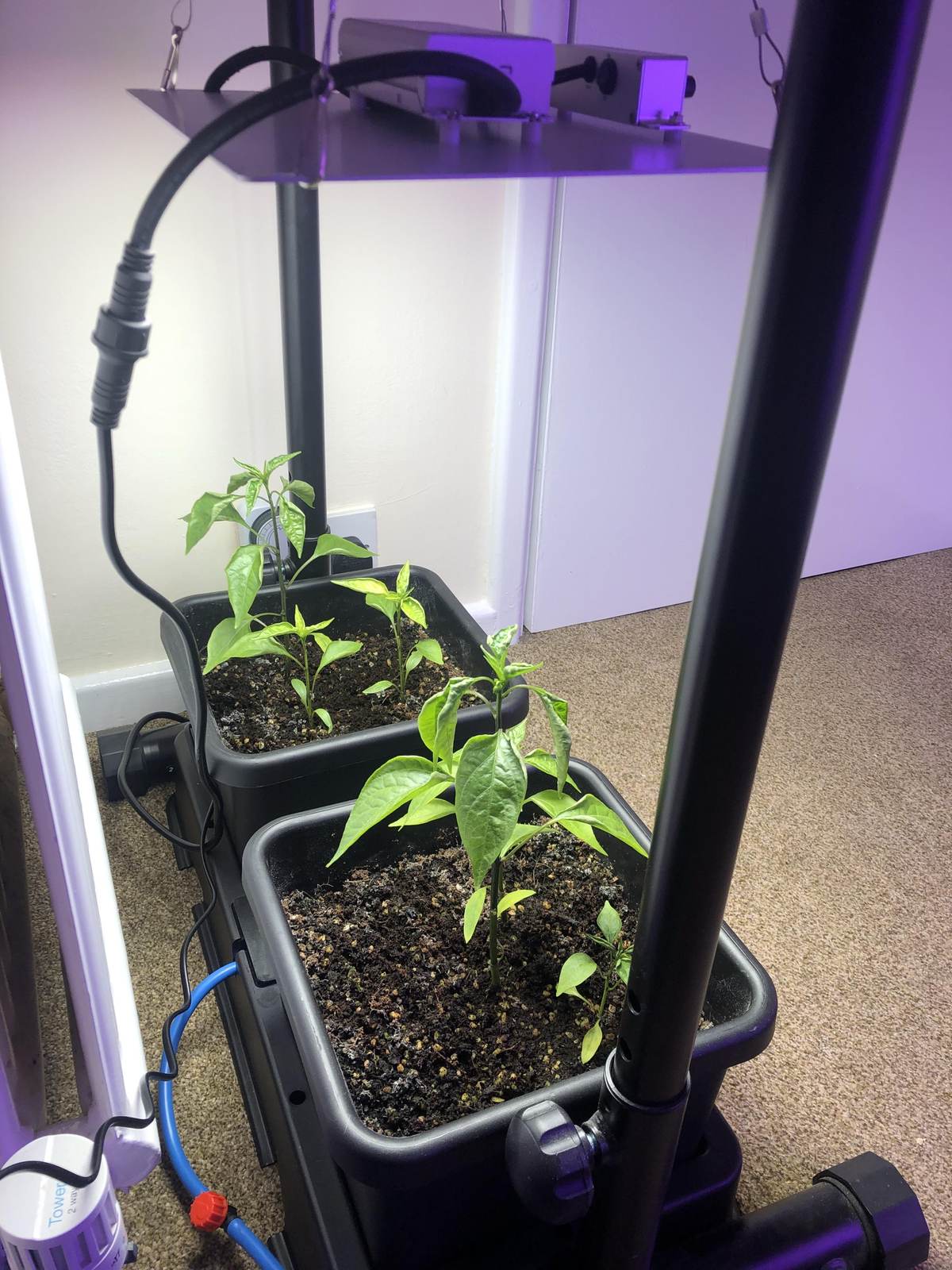
The reservoir on that system is very large. It’s 47 litres, so when it’s full, it’s extremely heavy. That’s around 47 kilograms of water.
You have to consider whether you can move it when it’s full. Will you have to wait for it to drain?
If you can’t move it, is it in a location where you can simply let the water drain out?
If it’s indoors, probably not.
Weight and moving
| Setup | Water when full | Moving and emptying |
|---|---|---|
| Small countertop kit (LetPot, iDOO, Click and Grow) | around five litres at most, about five kilograms | pretty easy to move, empty and refill |
| Larger kit (AutoPot) | 47 litres, around 47 kilograms | consider whether you can move it when it’s full |
Crop choice matters more than the kit
Return per pod
| Return | Crops |
|---|---|
| Highest | basil, parsley, coriander and mint; small leafy vegetables, like certain types of lettuce and rocket |
| Middle | slightly larger green plants: pak choi, larger and thicker types of lettuce, kale, chard and spinach |
| Lowest | high-energy fruiting crops, like tomatoes and strawberries; larger head-forming crops like lettuce, broccoli and cauliflower |
For me, pak choi was one of the most enjoyable crops to grow in terms of its return.
It was substantial enough that I felt like I actually had something to eat, rather than just something to garnish with, but it didn’t take a ridiculous amount of time.
Chillies were similar. They take a bit longer, but because they repeatedly fruit, they’re well worth the return.
If you get a kit with nine to twelve growing spaces, I would suggest growing herbs or cut-and-come-again leafy greens: plants that you can repeatedly harvest.
That’s going to get you your best return. You don’t want something that’s a one-and-done crop.
For me personally, the plants that have given me the most food per growing space have been taller, vertical plants.
They have a small footprint, but they grow quite tall and repeatedly fruit.
My specialty has been chillies, and I see them as one of the most worthwhile crops in terms of their return.
You get a reasonable amount of fruit from a single growing space, and you’re not looking to eat large quantities of chillies anyway. You use them somewhat sparingly.
So it’s a really good ratio.
The mistakes that turn a useful kit into something less useful
There are a few common mistakes when it comes to growing that can make a useful kit much less productive.
The first is not considering your spacing carefully.
Even if you’ve got ten to twenty spaces available, that doesn’t mean you should use all of them.
Consider the actual size the plant will grow to, or the size you want to grow it to, and predict whether the plants are going to crowd each other and compete for light.
That’s one of the main problems.
The next mistake is how you harvest.
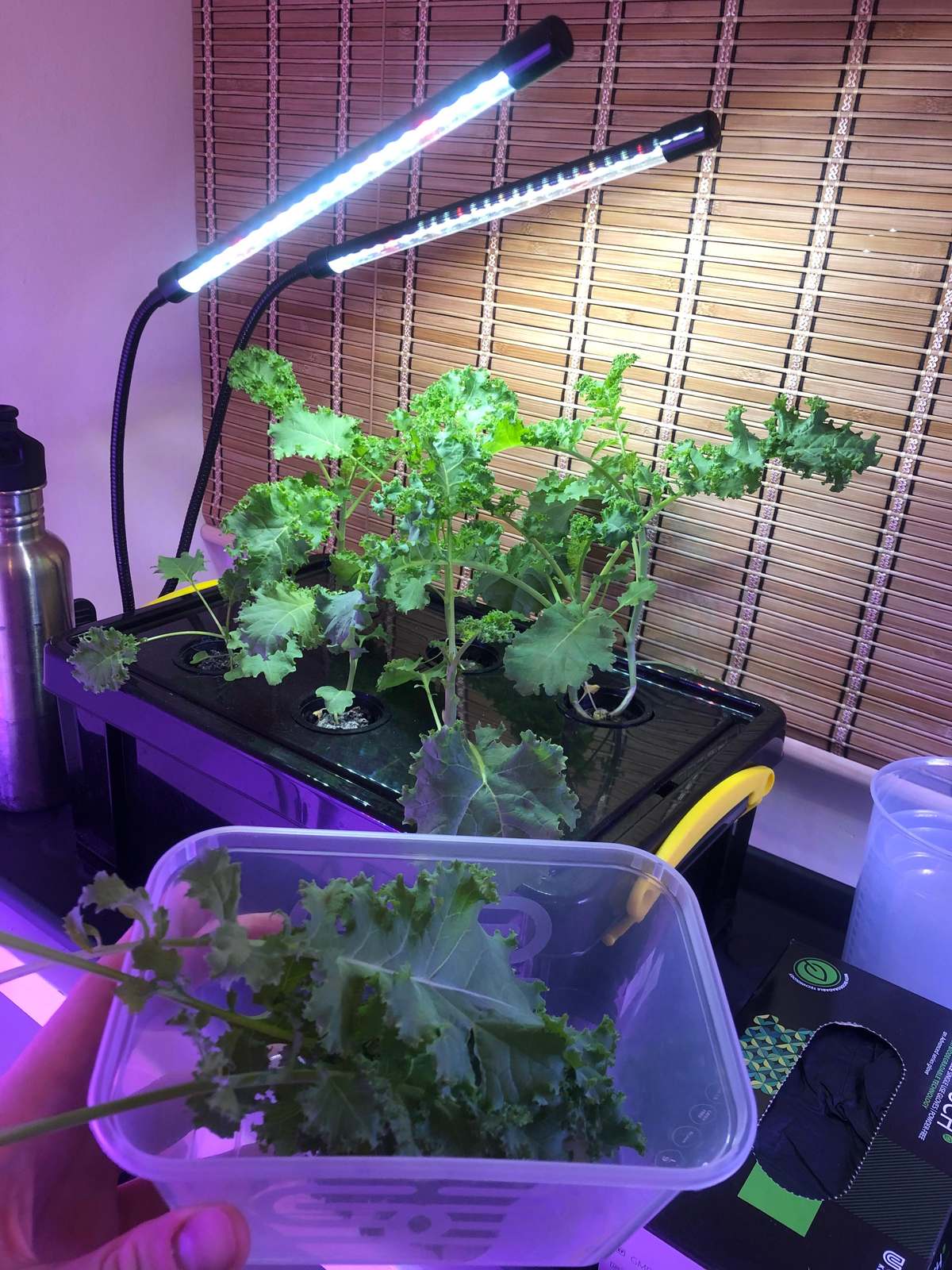
If you have herbs or leafy greens that you want to consistently harvest, especially after you’ve put the time into growing them, don’t cut the whole plant down.
You want to harvest the top leaves and outer leaves so that the plant can continue to survive. It needs to have enough leaves remaining to perform photosynthesis.
Another mistake is leaving the light too high or too dim.
What you’ll notice is that your plants become what’s called leggy. They start to stretch because they’re desperate to reach the light.
This makes them really weak and frail, and they’ll often break under their own weight and die.
It’s also important to eventually harvest everything, clean the kit and replant.
You can often tell when a plant has finished its natural growth cycle because it either stops fruiting or, if it’s a leafy green like lettuce, it starts to bolt.
Bolting is when the plant starts to flower, and that generally means it’s reached the end of its usable life cycle.
Finally, some kits don’t let you be particularly specific about the light cycle if they include a built-in light.
They might only have a few default settings, like 14 hours on and 10 hours off, 16 hours on and 8 hours off, or 12 hours on and 12 hours off.
Consider what you’re growing and look up what light cycle it needs at its current stage of growth.
Then adjust the light accordingly, or select the closest available setting if you can’t choose the exact schedule.
When a kit is honestly the wrong buy
If your aim is to grow salad for your family or any real quantity of fruiting crops, a countertop kit is probably the wrong tool.
You would be better off experimenting with a larger DIY system, like a 20-litre deep water culture bucket with a 40 to 60-watt light.
That’s not to say the price is necessarily going to be higher. It’ll probably be similar, but it might require a bit more DIY on your part.
If your aim is to grow fresh herbs, the occasional bowl of leaves, or something like chillies, which are a regularly fruiting ingredient or seasoning crop, then a countertop kit is a great option.
The seven checks are really useful here. They’ll help you decide what’s right for you.
I recommend choosing the smallest setup that passes all seven checks, rather than the best one that only passes six, for example.
You want to make life as easy as possible for yourself at this point, especially if it’s your first venture into hydroponics.
For more information, you can look at my kit comparison page for advice on how to choose your own kit, or my deep water culture guide if you’re interested in building your own system.
How much food a kit grows: questions and answers
How much lettuce can a countertop kit grow?
If you’re growing loose-leaf lettuce and harvesting it at maturity, you can expect enough for 3 or 4 salads from a nine to twelve-pod kit.
How much pak choi can a countertop kit grow?
I’ve grown four heads a month on my own LetPot system.
Can I feed my family from a countertop kit?
No, it’s not going to completely feed your family.
But yes, absolutely, you can regularly grow herbs and certain fruiting plants that will help enhance the dishes you’re already making.
That might be additions to salads or ingredients such as chillies.
Is a three-pod kit worth it?
For herbs on a worktop, absolutely. For anything more than that, probably not.
Can you grow chillies in a countertop kit?
Yes, definitely. I’ve done it, and it works really well.
Do bigger kits grow proportionally more?
It depends on the lighting and how much space there is between each growing pod.
If the crops are just going to overcrowd each other, you can only really grow the same amount.
But if the kit is physically much larger, with more space between the pods and enough room for the plants to grow, then yes.
What is the best crop for beginners who want actual food?
I would say loose-leaf lettuce, basil or chillies.
How long until the first harvest?
It depends on what you’re growing, but I’d say around a month.
One email a month from me, Charlie. What is new on the site, my answer to one grower’s question, and the latest video. No spam, no selling.


I’m Charlie, co-founder of Everything Hydroponics. I’ve completed an official qualification in hydroponic cultivation, I run the Everything Hydroponics YouTube channel, and I’ve advised and taught many new and existing growers. I’m a teacher at heart, so what you read here is backed up by peer reviewed research and presented in a digestible way. Most of my growing time now goes on chillies. More about Charlie
You might like these
DIY Indoor Hydroponic Herb Garden
Growing herbs hydroponically in the house is simple. Here is a great guide on building and managing your own indoor hydroponic herb garden.
Hydroponic Herb Garden Kit - A Great Alternative to DIY
Building your own hydroponic system is a great idea, but not everyone has the time or resources to do so. A hydroponic herb garden kit is a great alternative!
DIY Hydroponics and Kits - Projects and Kit Guides
DIY hydroponics projects and ready-made kits in one place: build a grow light stand or shelves, set up a herb garden, or pick the right indoor hydroponic kit.