Grow Room Temperature Explained
- Home
- Grow Rooms & Tents
- Temperature
Best Methods for Maintaining Grow Room Temperature
So, you've set up your grow room and you're ready to start growing lovely, fresh vegetables and herbs. At this point, it's important to make sure your grow room temperature is always on point and your plants are neither too cold nor too hot. It's common knowledge that most plants like air around them to be warm, but how warm exactly? And how can you create the optimal conditions for your plants and make sure the grow room temperature is perfect? If you've been wondering exactly that, you've come to the right place. In this guide, I'll cover which grow room temperature is optimal for plants and how you can keep your grow room temperature on point at all times, even in the heat of summer and the cold of winter.
The optimal air temperature for most plants is around 77°F (25°C) when the grow lights are on and 68°F (20°C) when the lights are off. When temperatures drop below 65°F (18°C), plants' growth will slow, and anything below 59°F (15°C) can stop plants' growth completely. If this happens, it can take 2-3 weeks for plants to recover, but sometimes they may not recover at all. If plants are too hot, they will experience stunted growth, leaf drop, leaf scald, and they can fail to flower and produce seeds. It's not too difficult to maintain optimal grow room temperatures, unless you live in a place where it's really hot or cold. However, you may need to heat your grow room during the cold winter months and cool it down during the hot summer days. So, without further ado, let's take a look at the things you can do to keep your grow room temperature on point all year round.
Maintaining Optimal Grow Room Temperature in the Winter
Insulate Your Grow Room
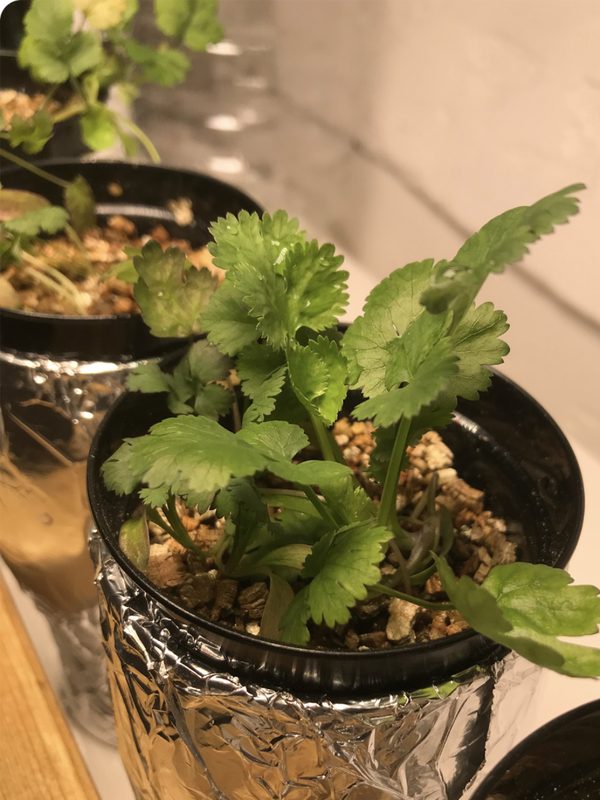
The first step to maintaining optimal grow room temperature in the winter is to insulate your grow room to prevent heat from escaping in the first place. Check the seals on the doors and windows in your grow room and replace them if they are damaged or worn out. Make sure the air ducts for intake and exhaust fans are well-insulated too. If you can afford it, you can insulate the walls in your grow room. You can also insulate parts of your hydroponic system. If you're growing in pots, you can wrap aluminium foil sheets around them. If the pots are in direct contact with the cold floor, you can put a polystyrene plastic sheet in between the pots and the floor.
Take Intake Air from a Warmer Space
If your intake air comes from outside in the winter, it will obviously bring the temperatures down in your grow room. You can try taking intake air from a warmer space, for example, from inside of your home instead of from the outside. This will help increase the temperatures in your grow room dramatically.
Improve Air Circulation
Warm air is less dense than cold air, so it flows upwards, which means there might be pockets of warm air closer to the ceiling in your grow room. You can improve air circulation by simply adding a stand fan. This will help circulate warm air around your entire grow room.
Put Your Exhaust Fan on a Timer
You need to have an exhaust fan on for proper ventilation, but you should consider putting it on a timer, especially during the periods when the grow lights are off. You can get a day/night fan speed controller, and you can set temperature limits for day and night, which means the exhaust fan will turn on automatically only when necessary, and this will help keep the air temperature from getting too cold.
Get a Heater for Your Grow Room
If you live in a really cold climate and insulating your room and optimising air circulation is not enough, you'll need to get a heater for your grow room. There are different varieties, like tube heaters and thermostat-controlled electric heaters. Tube heaters are small, affordable, and don't consume a lot of power, so they are perfect for small spaces. They are not controlled by a thermostat, so you'll need to watch your grow room temperature to make sure it doesn't get too hot. If you want a heater controlled by a thermostat or you have a bigger grow room, you'll need to get an electric grow room heater. They are more expensive than tube heaters, but they produce much more heat, and they are controlled by a thermostat, so you can set them to a certain temperature and won't have to worry whether your grow room is too hot or too cold.
Maintaining Optimal Grow Room Temperature in the Summer
Have a Proper Ventilation System in Your Grow Room
We often forget air exists because it's invisible. However, we cannot live without it and neither can plants for that matter. So, if you're growing indoors, you'll need to have a proper ventilation system. Without proper ventilation, your plants won't grow well and you'll get poor harvests. Grow room ventilation is essentially a system that ensures a continuous flow of air between the outside and your indoor growing area. It can also include mechanisms for air circulation inside the grow room. There's a guide dedicated to setting up a proper ventilation system in your grow room on this site.
Invest in an Air Conditioner
Nothing can manage heat better than an air conditioner, and if you live somewhere where summers get really hot, you might need one. Window AC units are relatively affordable, but do your research and make sure it will be able to cool down your grow room before you buy. If it doesn't get too hot in the summer, you might get away with a simple fan and a good ventilation system.
Get a Swamp Cooler
Swamp coolers, also known as evaporative coolers, use one of the basic principles of air conditioning to reduce the ambient temperature. When water is converted from a liquid to a gaseous state, it absorbs heat. In a swamp cooler, a fan propels hot air through water-moistened media, evaporating the water. Swamp coolers can drop ambient temperature by 5-10°C. They also increase the humidity, but only just slightly, around 2-5%. If you have a proper ventilation system in your grow room, this shouldn't even be noticeable.
Consider Changing Your Grow Lights
Grow lights produce quite a bit of heat, but some produce more heat than others. Metal halide (MH) and high-pressure sodium (HPS) grow lights produce considerably more heat than LED or fluorescent grow lights. Full-spectrum or RGB LED grow lights are more versatile, convenient and energy-efficient than MH and HPS grow lights because you can use one grow light at all stages of plants' growth and don't need to change bulbs, but they are more expensive. However, switching to LED grow lights will help lower your grow room temperature considerably, and it might be cheaper than installing an AC unit or getting a swamp cooler.
Run Grow Lights at Night
Ambient temperatures at night are cooler than during the day, so it makes sense to use grow lights when the ambient temperature is naturally lower. Also, many electricity suppliers charge lower rates during off-peak times, usually from 7 p.m. to 7 a.m. So, running your grow lights at night instead of during the day can help you manage your grow room temperature as well as perhaps saving you some money.
One email a month from me, Charlie. What is new on the site, one grower’s question answered properly, and the latest video. No spam, no selling.


I’m Charlie, co-founder of Everything Hydroponics. I’ve completed an official qualification in hydroponic cultivation, I run the Everything Hydroponics YouTube channel, and I’ve advised and taught many new and existing growers. I’m a teacher at heart, so what you read here is backed up by peer reviewed research and presented in a digestible way. Most of my growing time now goes on chillies. More about Charlie
You might like these
Setting Up a Grow Room - A Step-by-Step Guide
When setting up a grow room there are a number of variables to consider. Follow this step by step guide on setting up a grow room for the best results.
Grow Room Ventilation Explained
When setting up a grow room it is very important that you have good grow room ventilation. Here is everything you need to know.
Adding CO2 to a Grow Tent and CO2 Management
CO2 only helps once light, heat, nutrients and water are already right. What level to aim for, and why a burner is wrong for a small tent.